

“The dogs bark, but the caravan moves on.”
Arab Proverb
The foundation of PR pitches for money transfer startups rests on a relatively intuitive view of banks: they are massive institutions with bureaucratic cultures, subpar customer service, and outdated digital capabilities. From there, the pitch makes a bigger leap: banks will eventually be displaced from cross-border money transfer. The diagnosis is mostly right: typical banks are usually behind leading fintech startups in service quality and pricing, and most do not consider money transfers strategic. The displacement conclusion is where the pitch breaks.
Why Banks Don’t Take Money Transfers Seriously
It would be naive to assume banks aren’t concerned about competition. In the United States alone, 4,000 banks and countless credit unions compare their strategies obsessively with local and national competitors. However, banks naturally view their competition pragmatically: “What are the top five reasons for revenue slowdown?” or “Which new business trend could jeopardize 10% of profits?”
You have probably heard that the market size of consumer cross-border money transfer services is substantial. Remittances alone amount to a trillion in volume, and the overall cross-border consumer money transfer volume is about twice as large. However, with an average margin of less than 4%, $2 trillion in volume translates to about $70 billion in global revenues for the consumer cross-border money transfer industry. Because banks generate most of their revenue domestically, the portion of money transfer revenue relevant to banks is much smaller. The United States, the world’s largest outbound market for consumer money transfers, accounts for about 20% of global revenue, totaling around $15 billion.
How does that $15 billion compare to the current revenues of the four largest US banks? Let’s examine the overall, consumer, and cross-border business revenues of these banks, all of which rank among the top 25 global banks: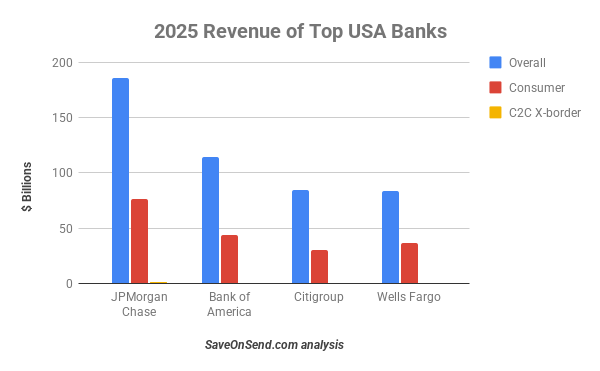
If you zoom in on the chart above, the banks’ current remittances revenue becomes barely visible. It represents approximately 0.5% of the banks’ overall revenue, or 1-1.5% of their consumer banking revenue.
Courtesy of The Guardian, you can observe similar data for Santander in 2017, where all cross-border-related business represents around 1.5% of the bank’s total revenue (disregard the sensational and erroneous point about “10% of the Group’s profit):
For Wells Fargo, cross-border money transfer fees are so minimal that the bank separated them for the last time in 2019. Even the old line was not pure remittances. Wells defined “wire transfer and other remittance fees” as fees for funds-transfer services plus cashier’s checks and money orders. Its remittances arm, Global Remittance Services, also known as Wells Fargo ExpressSend, remains a dedicated Wells customer remittance product with roughly $2 billion in annual volume. It represents less than 20% of Wells Fargo’s overall cross-border money transfer volume, but 50+% of transactions.
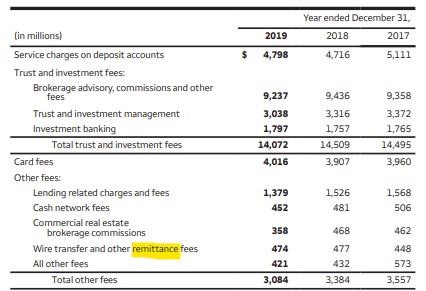
Source: Wells Fargo
Even if one of these banks were to miraculously become the country’s sole provider of remittances, displacing hundreds of competitors in the process, it would gain only an additional 10% on top of its consumer business.
Banks competitive position
All US banks’ annual cross-border consumer money transfer volume totals about $160 billion, accounting for about 40% of US outbound volume. This figure encompasses all consumer types, including affluent clients of banks’ Private Banking groups. Banks’ significant market share is not exclusive to the US. For instance, for transfers from the UAE to India, a single bank, Axis, commands a 20% market share. Korea’s top 5 outbound money transfer providers are the country’s four largest banks and Western Union.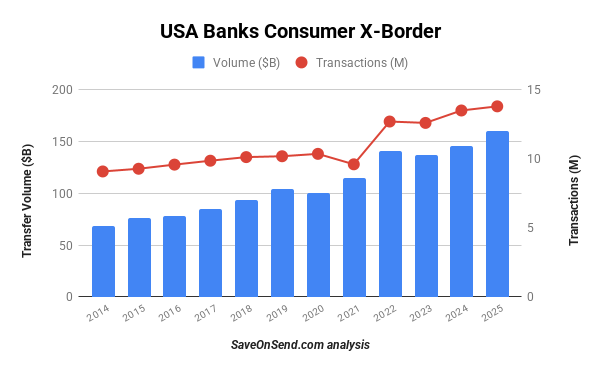
Now, let’s compare the size of cross-border global money transfer volumes between the banks and the cross-border specialists, also known as Money Transfer Operators (MTOs), including fintechs:
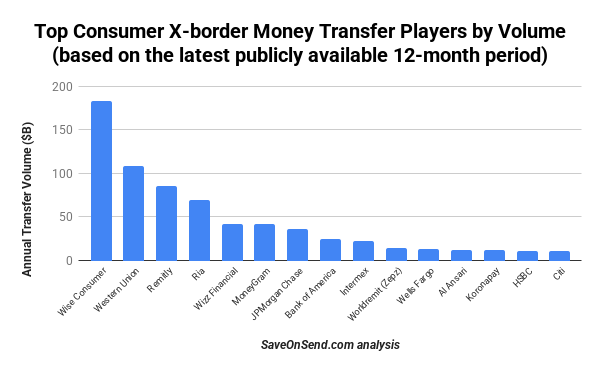
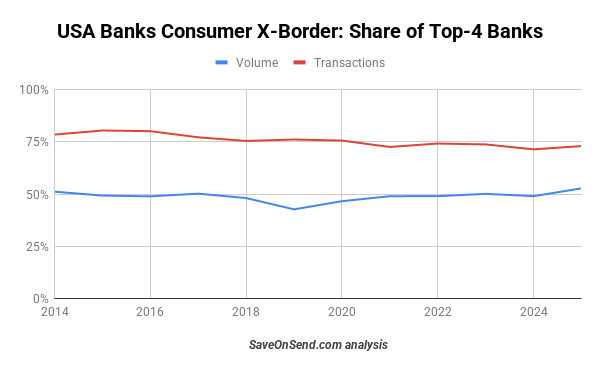
The largest banks in each country usually handle the majority of transactions and about half of the transfer volume out of the country:
Top banks lag behind the leading specialists in transfer volumes, partly because they lack a consumer presence in other countries. However, within a single country like the US, the top two banks are not as far behind leading traditional MTOs and fintechs:
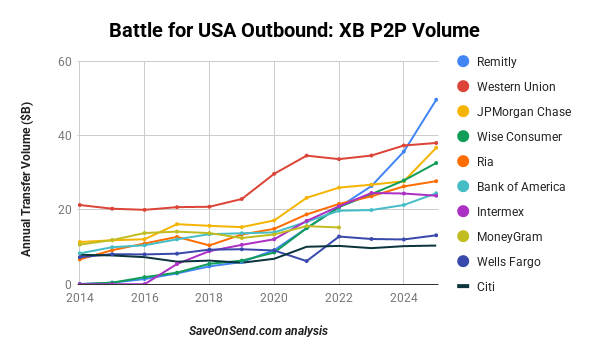
Over the past decade, the four largest banks in the US have doubled their collective transfer volume, outpacing Western Union’s growth. However, fintechs have grown much faster during the same period. Less than 15 years after launch, Remitly transfers more outbound volume from the US than any bank, and Wise is only behind JPMorgan Chase.
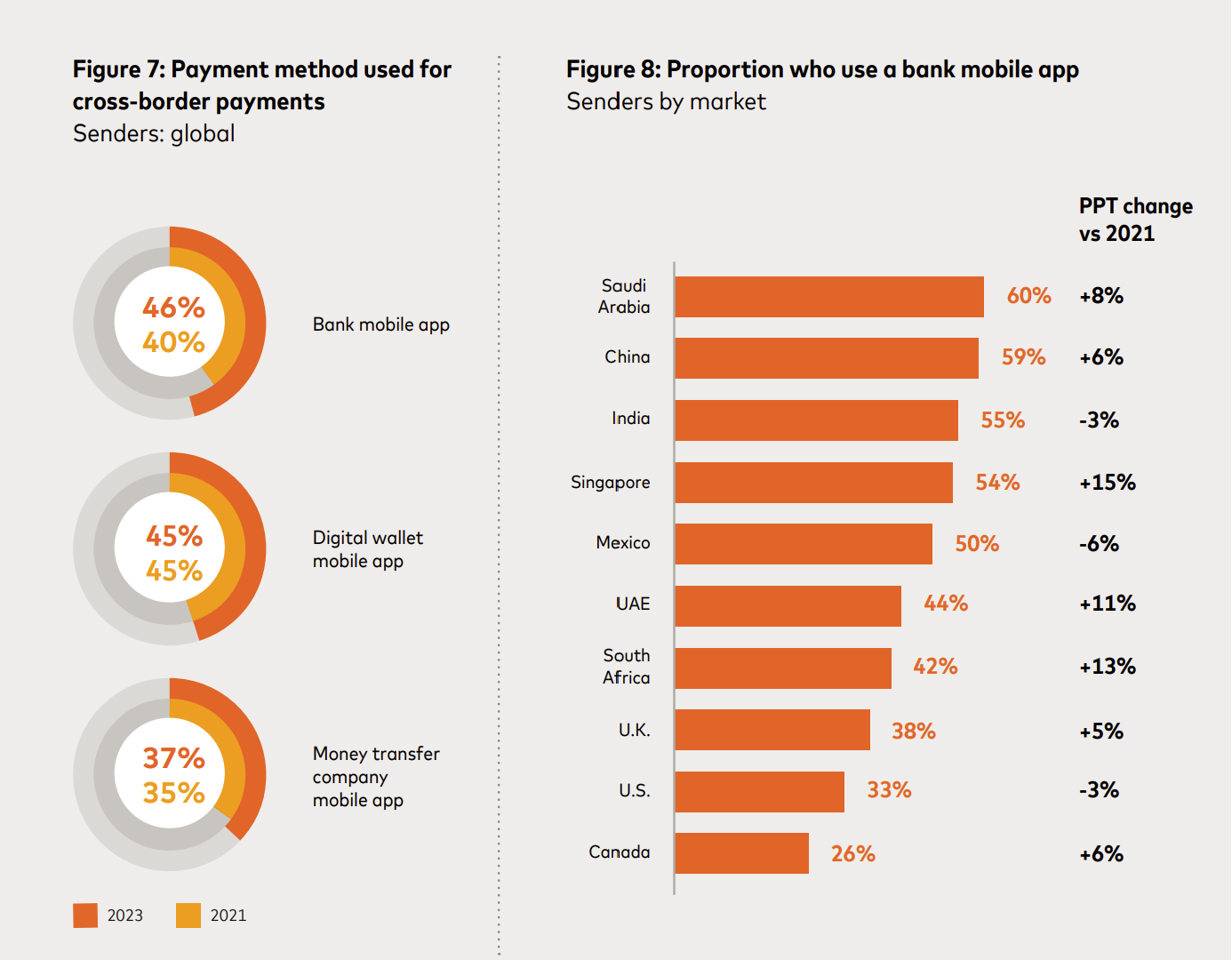
Top banks not only remain among the top 10 outbound players within each country despite the growth of fintechs, but are also becoming more digitally mature. Between 2021 and 2023, bank mobile app usage for remittances grew the most compared to wallet and money transfer apps, making it the most used app among these three groups:
Banks are also beginning to modernize the underlying rails without pretending to be fintech startups. In 2026, Swift began rolling out a consumer payments scheme with major banks that commits participants to upfront fee and FX transparency, full-value delivery, last-mile processing and end-to-end tracking. Bank of America is building a similar real-time cross-border stack for corporate, commercial and financial-institution clients: pre-funded/local delivery, FX, compliance, tracking and access through Swift or CashPro.
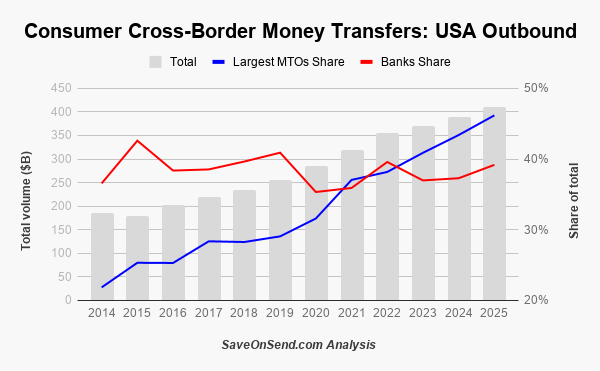
Probably the most surprising finding is that, while the U.S. consumer cross-border money-transfer market has more than doubled over the past decade, banks’ share has remained broadly stable at around 40%. At the aggregate level, fintech growth did not produce a visible collapse in bank volumes. For Remitly-style remittance specialists, displacement of smaller MTOs is the cleaner story; Wise requires a separate treatment.
Wise built directly against expensive bank cross-border transfers, and Wise has said most customers previously used banks. But customer origin is not the same as volume origin. A customer might have sent $1,000 a year through a bank before joining Wise and then send $10,000 through Wise afterward. In that case, the customer is bank-origin, while only a fraction of today’s Wise volume represents displaced bank activity.
This distinction matters because Wise’s Personal business now moves $180+ billion a year across about 19 million unique customers, with an estimated average cross-border transfer around $1,500-$1,700. That sits between traditional low-ticket migrant remittances and the $8,000-$14,000 average transfer sizes reported by JPMorgan Chase, Bank of America, and Citi.
What Banks Don’t Like About Consumer Cross-Border Money Transfers
Beyond being a minor source of bank revenue, cross-border money transfers have become increasingly challenging. As outlined in another SaveOnSend article, regulations designed to combat terrorism financing, money laundering, and tax evasion, while necessary, have also required significant investments in resources and systems for service providers.
This burden is twofold for a large bank: offering customers cross-border money transfers and banking services to Money Transfer Operators (MTOs). The latter business has become exceedingly complex from a compliance perspective, leading banks en masse to close money transfer providers’ accounts, a global trend known as “de-risking“. In essence, the profits banks earn from serving MTOs do not offset the additional investment requirements and legal exposure created by regulations. Here’s how a senior banker privately describes the risks associated with holding a correspondent account for a large remittance company (“XYZ,” to maintain anonymity):
“We have an acute concern with a regulatory actions against our bank if XYZ’s x-border client commits an illegal activity. To manage risk exposure, our bank conducts an annual two-full-day dedicated compliance due diligence on XYZ with AML, Compliance, Payments committee members and stakeholders from Risk, Banking and Cash Management teams. One of top priorities is to ensure that we are only enabling business accounts transfers for XYZ and that those transfers are done for a specific purpose (not gambling, drugs, etc.) – as providers, at times, knowingly or unknowingly, misrepresent types of accounts and their purpose. Even when discussing a renewal of credit commitments for XYZ, a topic seemingly far away from a nature of cross-border transfers, about a third of our banking peers decline to join our bank due to potential regulatory concerns.”
So far, de-risking has primarily affected the smallest MTOs, cryptocurrency exchanges, and a handful of high-risk destinations, such as Somalia and the Cayman Islands. However, even for the most prominent money transfer specialists, it remains a significant concern. Most have a primary banking partner but also maintain a relationship with another major bank as a precaution.
Banks regularly audit remittance providers using their services to mitigate regulatory exposure. Consequently, many bank employees understand how remittance specialists operate, whether Western Union or Wise. If the banks’ senior leadership were inclined to do so, it would be relatively straightforward for their money transfer managers to replicate “best practices” and concentrate on consumer remittances. However, they don’t choose to pursue this.
Banks’ Strategy for Money Transfers
There are three go-to-market models for banks in remittances:
- Ignore: most banks only offer wire transfers.
- Prioritize building a separate money-transfer business.
- Partner: rely on a specialist to serve your customers.
Banks’ partnerships with incumbent MTOs or fintechs have existed for many years. In 2016, calling it a minor bottom-up experiment, TransferWise signed up two banks that were inconsequential at the time: N26 and LHV. It signed just one more in 2017 (Starling). In 2018, TransferWise raised the stakes by creating a stand-alone global partnership team and launching an API portal. That year, it lost Starling and gained Monzo:

In July 2018, TransferWise (Wise) signed its first partnership agreement with a large bank, BPCE, but it never went into production. In 2019, TransferWise signed up a few more tiny banks in the US and Australia. Afterward, the pace picked up. By early 2024, Wise Platform had agreements with over 85 partners, representing 10 million customers and businesses (N26 and Monzo have grown significantly since these agreements were signed). Some partners even claim 15% penetration, but assuming an average 5% penetration, this line of business already accounts for 5-10% of Wise’s active customers. Wise expects most of its volume to come through its Platform business one day.
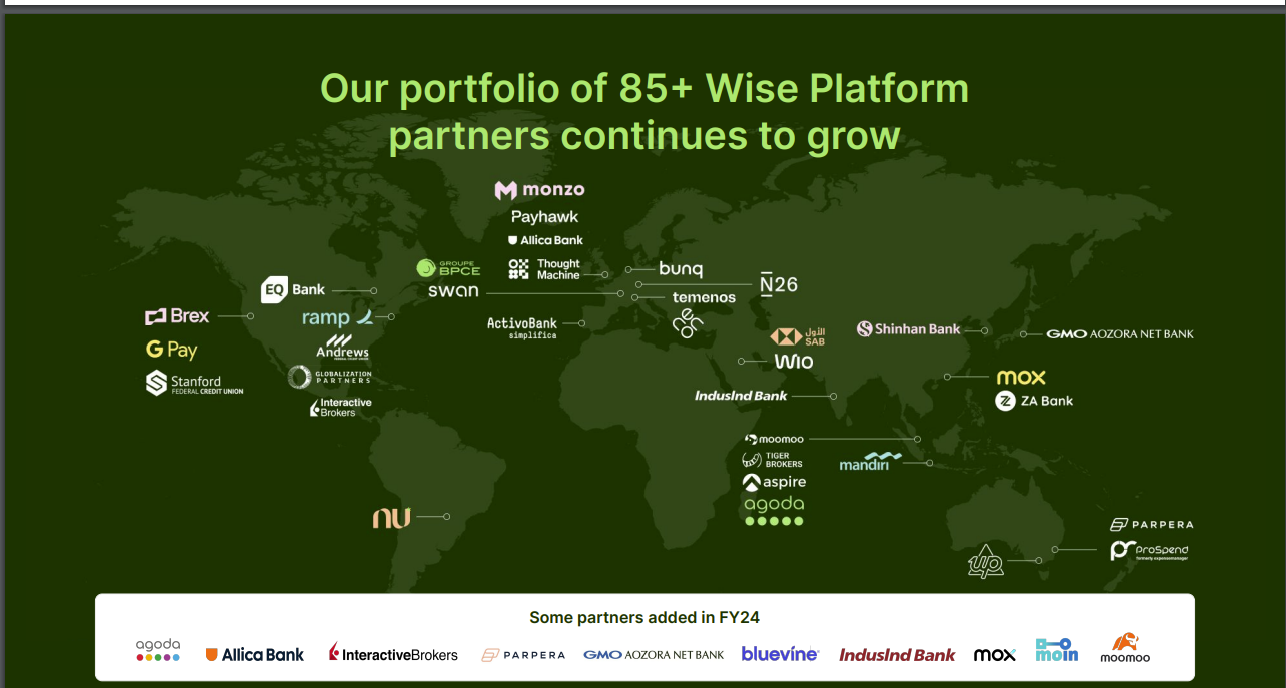
Unsurprisingly, the world’s largest banks have ignored such partnerships because they are unconcerned about disruption, whereas smaller banks typically lack customers with such needs. For example, in the US, only about 10% of banks offer international money transfer services. Ironically, instead of JP Morgan Chase using Wise as a white-label solution for money transfers, Wise was the first to use Chase to offer interest-bearing accounts.
Who is using banks for money transfers?
All consumer segments use banks for international money transfers, including recent migrants.
Until about a decade ago, migrants relied even more on banks for cross-border transfers. However, providers like Western Union and Xoom began offering digital services. Despite this, the volume of money transfers going through banks continued to increase as more migrants came to the US and opened bank accounts:
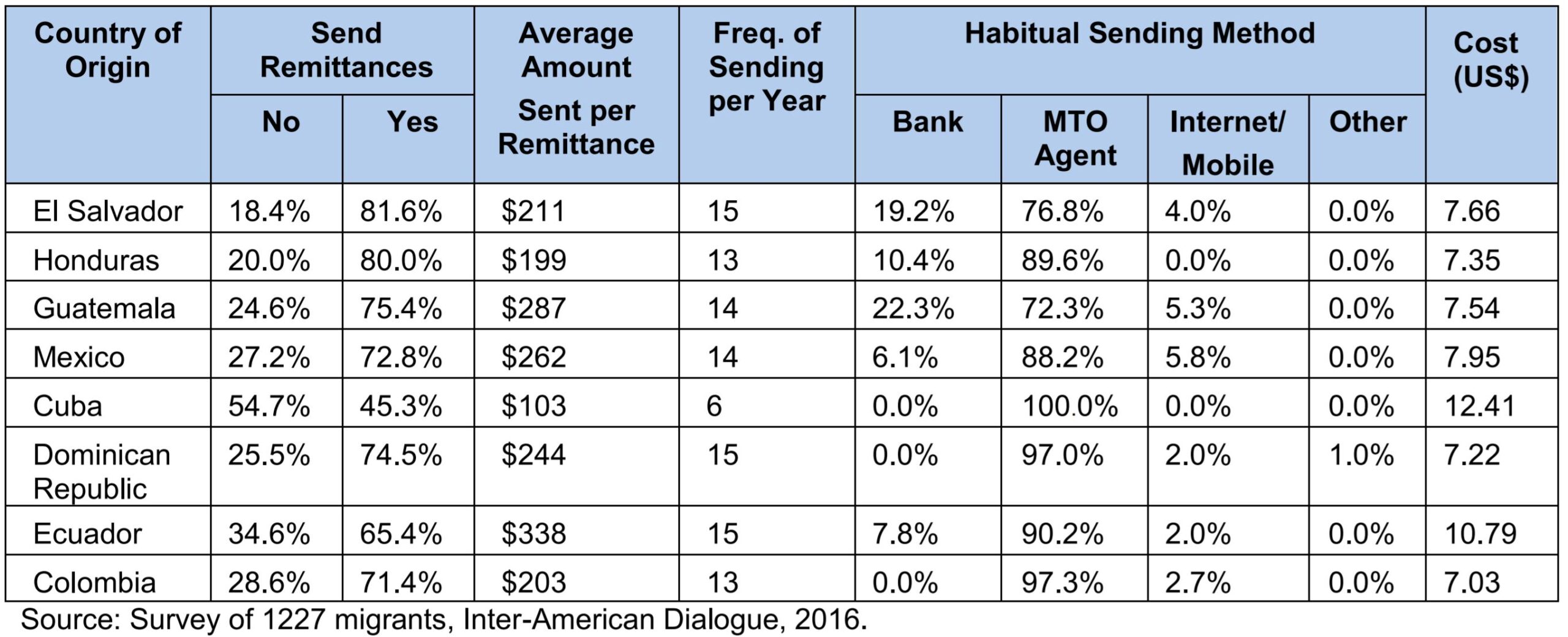
However, typical users of bank money transfer services differ from customers of MTOs and fintechs. Let’s review the average transfer amounts (in thousands of dollars) among top banks: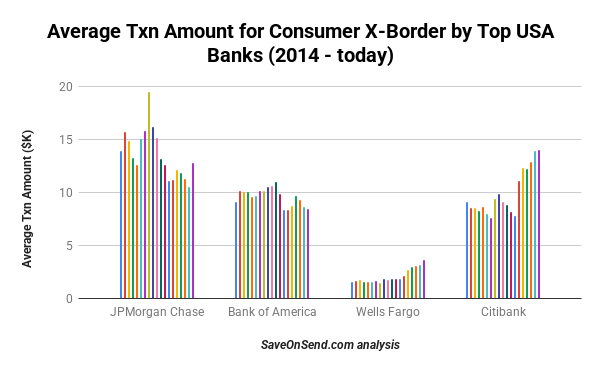 Compare this with average remittance amounts: $100-$400 per transfer depending on origin country. Wise’s Personal average transfer of roughly $1,500-$1,700 is much larger than traditional low-ticket migrant remittances, but still far below the $8,000-$14,000 average transfer sizes reported by JPMorgan Chase, Bank of America and Citibank. Banks’ primary consumer sub-segment is different: less-frequent senders who move much larger amounts, often through wire transfers.
But why does the average transaction size for Wells Fargo differ so significantly? It is the only US bank that actively targets traditional remittance consumers among its customers, with a dedicated product launched in 1994 and a separate landing page launched in 2007:
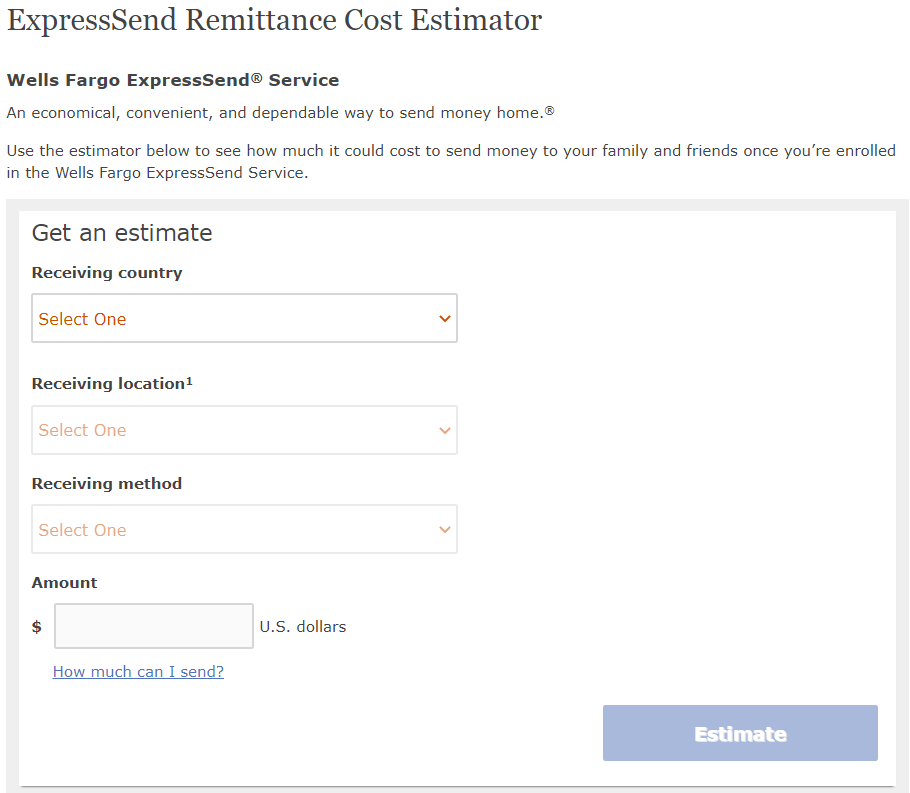
While performing well overall, Wells Fargo has been particularly successful in the USA-to-Philippines corridor, where it ranks among the top 5 digital remittance providers, despite charging above-average margins.
Banks’ pricing for money transfers
Traditional bank money transfer services tend to be expensive. Wise (TransferWise) even claimed that banks are 10 times more expensive early in its scaling.

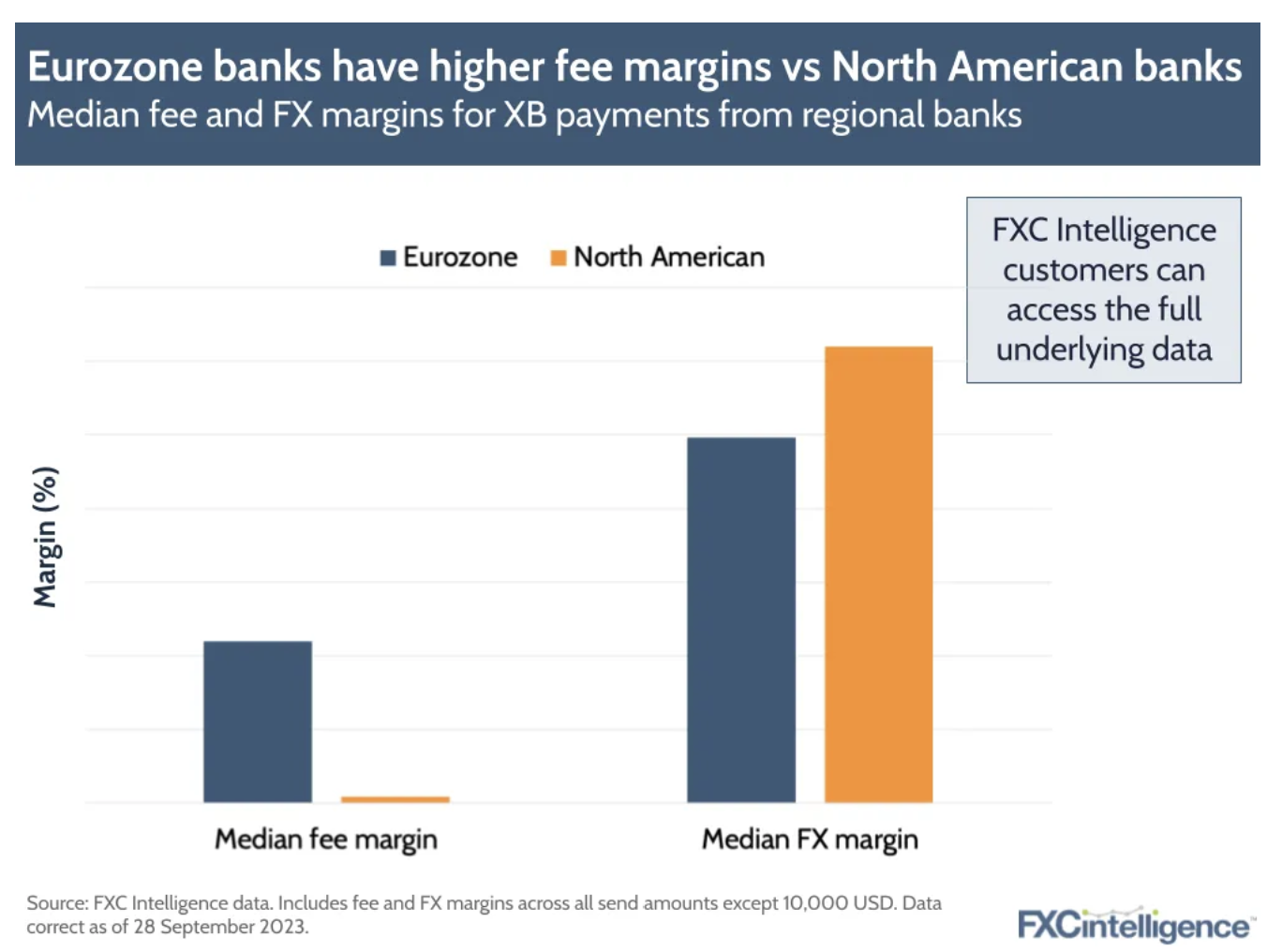
Those claims were misleading (see this SaveOnSend article for more), but the pricing gap between traditional banks and money transfer specialists remains. This is mainly because banks offer worse foreign exchange rates, which can be less transparent to customers than fees. However, banks make money differently on cross-border transfers in Europe than in North America. In Europe, banks charge much higher fees, while in North America, they charge a higher FX markup.
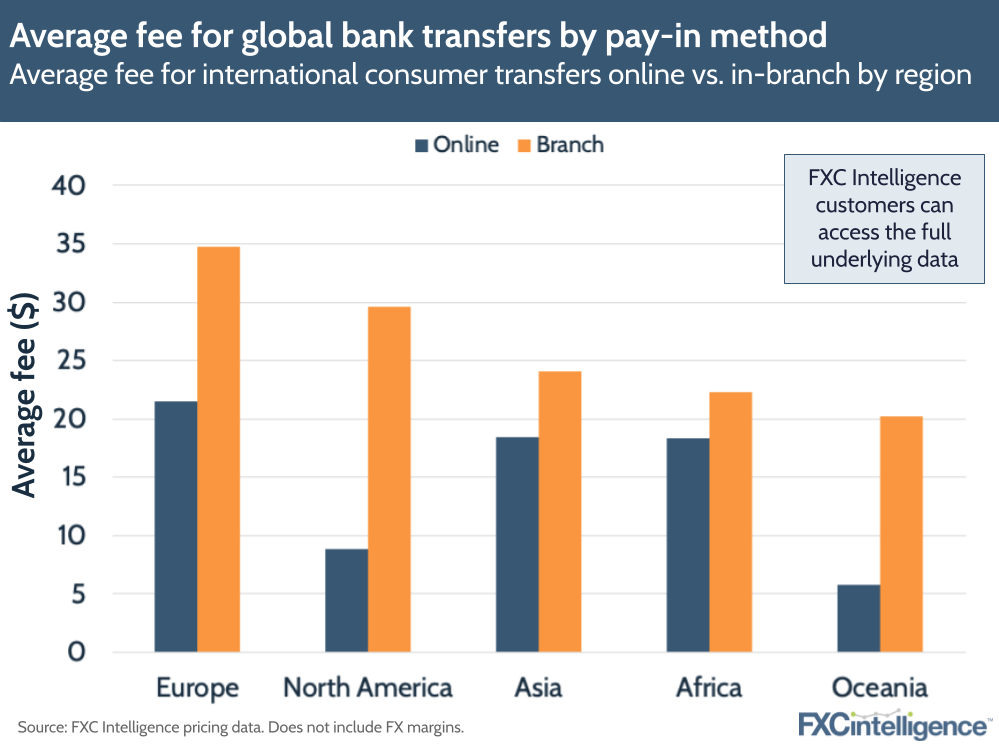
Historically, banks have charged $25 to $50 for wire transfers. However, competition from fintech companies and the cost advantages of digital channels have led to considerably lower prices for online transfers than in-branch service.
Banks may not charge fees for higher-volume transfers. For example, JP Morgan Chase, the largest retail bank in the US, doesn’t charge a fee for wire transfers exceeding $5,000:
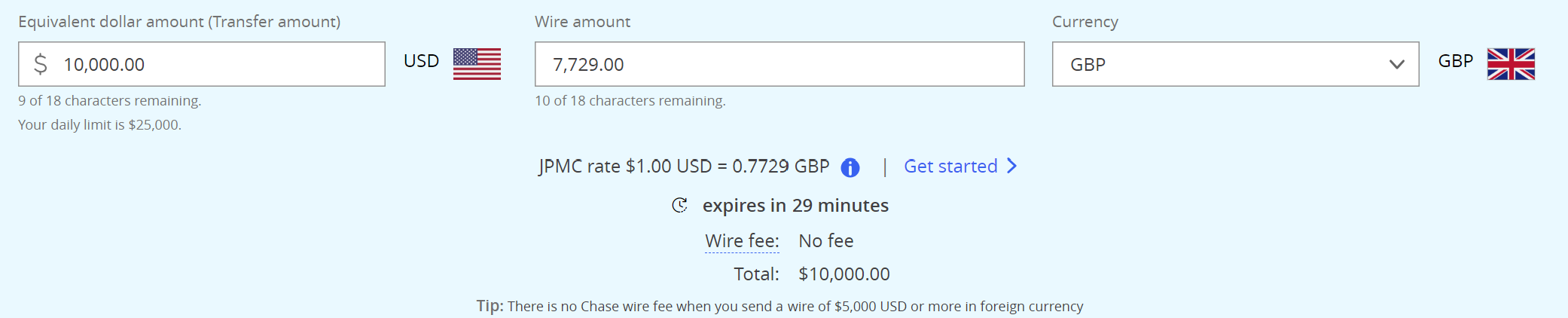
When banks conduct international money transfers at rates 2-3% less favorable than the market rate, it is easy to eliminate visible fees. An average $10,000 transfer translates to $200-300 in revenue per transaction via a low-cost digital channel. Not a bad business.
Do customers like their bank?
What about the quality of service for cross-border customers in those banks? It’s common to hear that consumers view their banks negatively, with a cliché suggesting millennials would prefer a root canal to dealing with a banker. In reality, among millennials, satisfaction with a bank’s branch experience exceeds 80%. On the other hand, a sleek online interface might feel less trustworthy when sending money.
Some might even argue that consumers strongly like their banks. Just how strong is this affinity? Take Wells Fargo, for example, which was embroiled in multiple public scandals, including the opening of fake accounts and withholding insurance refunds. Did the bank’s customers shift their business to any of the thousands of other banks or opt for a trendy fintech startup? Nope, they stuck with Wells Fargo:
Moreover, migrants tend to show strong loyalty to banks from their home countries that offer services in host countries. PNB is the 5th largest bank in the Philippines and plays a significant role. Similarly, ICICI and IndusInd banks, ranked #2 and #6 in India, remain active players in transfers from the US to India.
Banks’ service quality
Like US banks, the remittance portals of many non-US banks (PNB, ICICI, IndusInd) appear ten to twenty years out of date. Given the superior digital capabilities and pricing offered by MTOs and fintech players, it can be perplexing that these banks continue to attract remittance business. However, this backwardness may evoke a sense of tradition and stability for some customers.
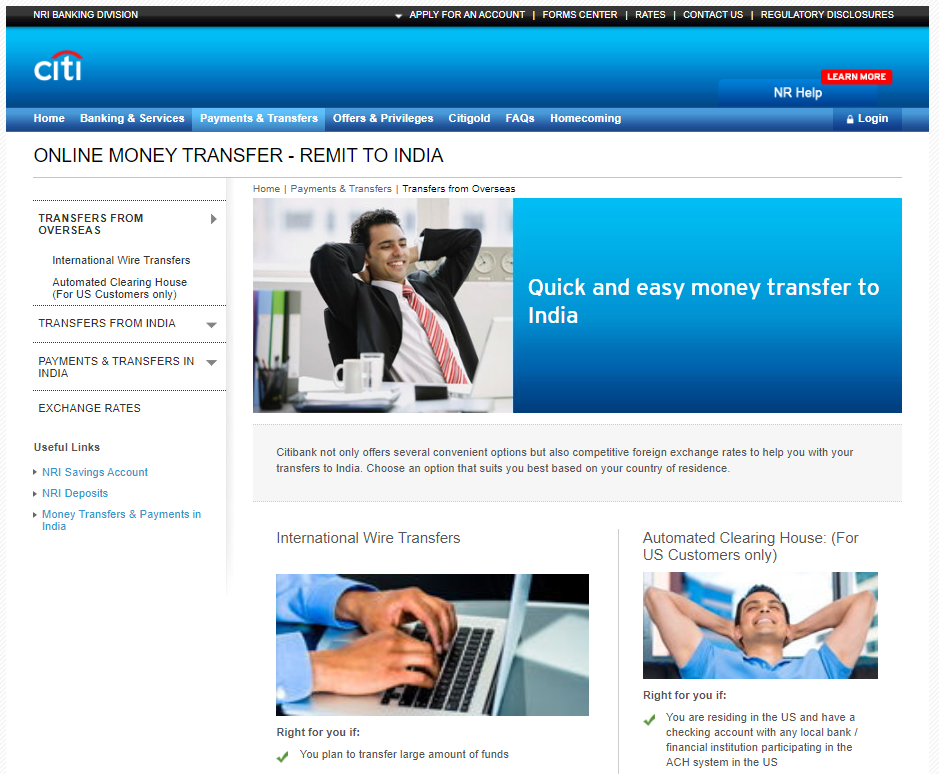
While Wells Fargo stands out among the largest US banks for its comprehensive approach to targeting typical remittances, other banks may also engage selectively. For instance, India is not only the world’s largest recipient of remittances, but its citizens in the US tend to be more digitally savvy than other large migrant groups. Consequently, Citibank has created a dedicated global landing page tailored to this niche.
Banks’ attempts to build money transfer fintech
Only a handful of banks have established separate fintech subsidiaries dedicated to cross-border money transfers. This approach allowed them to explore digital technologies without risking their primary brand. A case in point was BBVA Compass in the US, formerly a BBVA subsidiary. It strongly emphasized Latin American markets and ranked among the top thirty US banks in consumer cross-border volume. However, a notable decline in cross-border volumes in 2016 prompted the bank’s executives to prioritize the cross-border consumer business within their overall strategy.
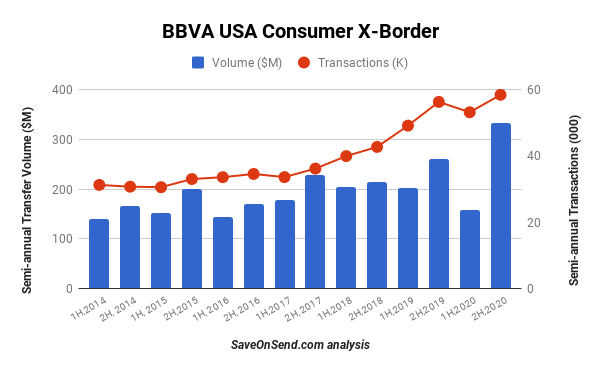
Renowned for its innovative culture, BBVA made a significant move in October 2017 by launching a dedicated mobile remittance application. The bank commenced with the USA-to-Mexico corridor and named the app Tuyyo, which translates to ‘you and I.’ The app offered a basic user interface and had limited features.
The bank continued to charge an above-average margin, approximately 3% in total, with half from a fee and the other half from a foreign-exchange markup. Despite an extensive PR campaign, six months after its launch, the app had minimal downloads:
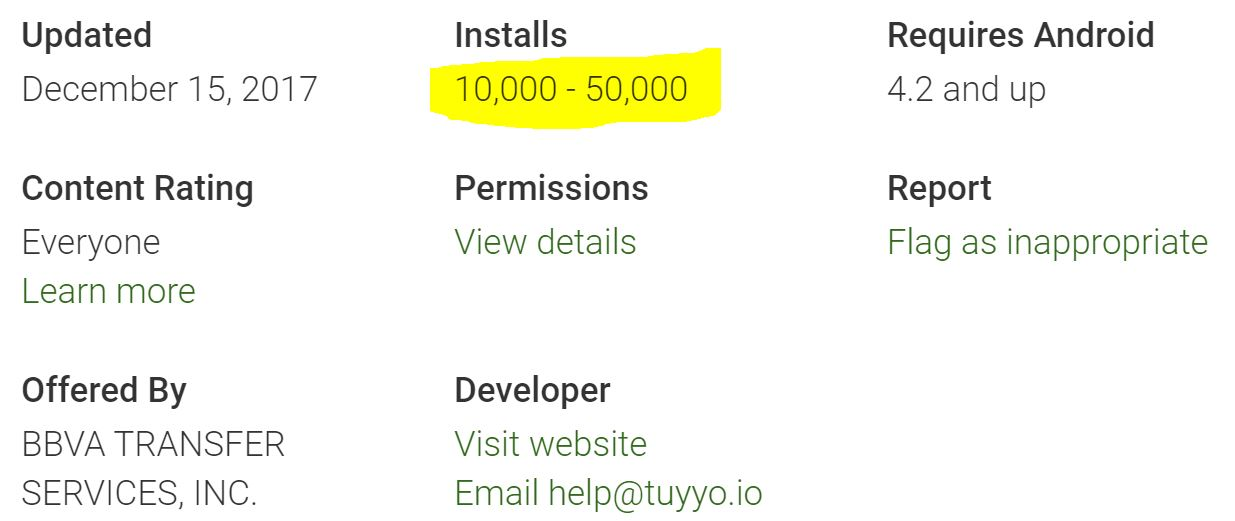
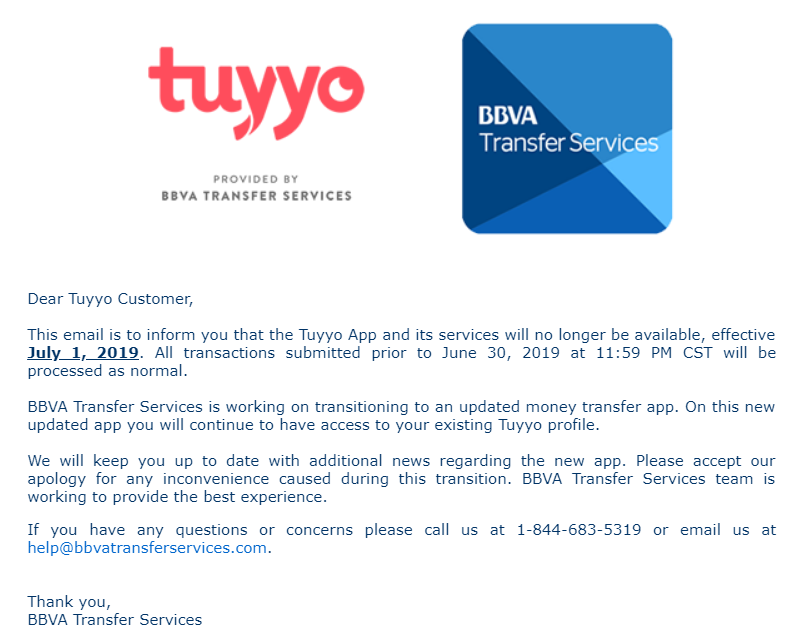
Less than two years after launch, it became clear the app couldn’t compete with leading fintech players in the space, and BBVA announced it would shut down its services.
The same fate awaited another Spain-based bank with a global reach, Santander. In April 2020, the bank launched PagoFx, a Wise wannabe:
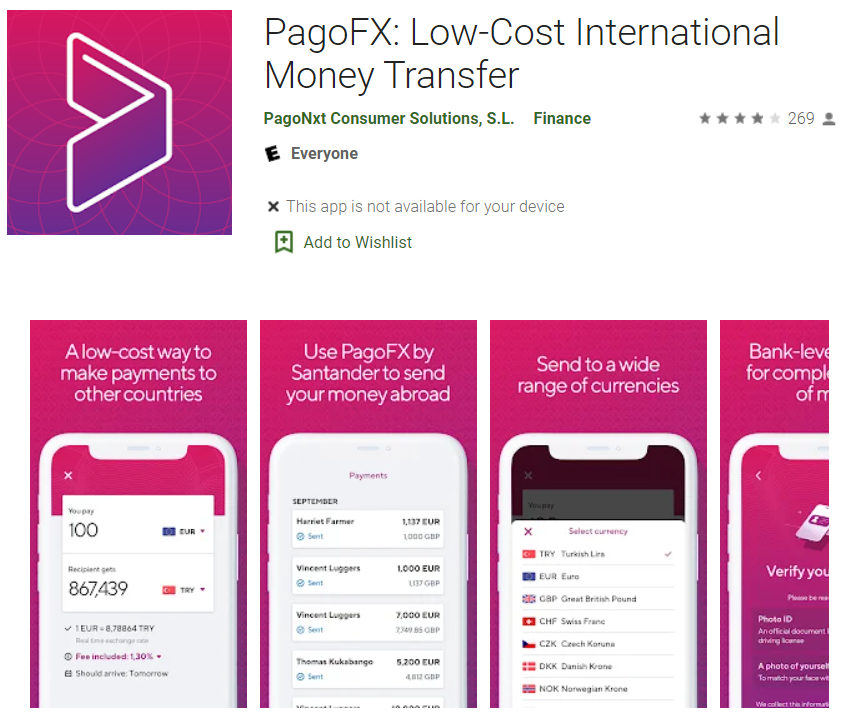
Santander took only 15 months to shut down PagoFx for remittances and pivot to business payments as PagoNxt. Banks repeatedly failed to grasp that taking market share from specialists is a magnitude more challenging than satisfying existing customers with enhanced digital user experiences.
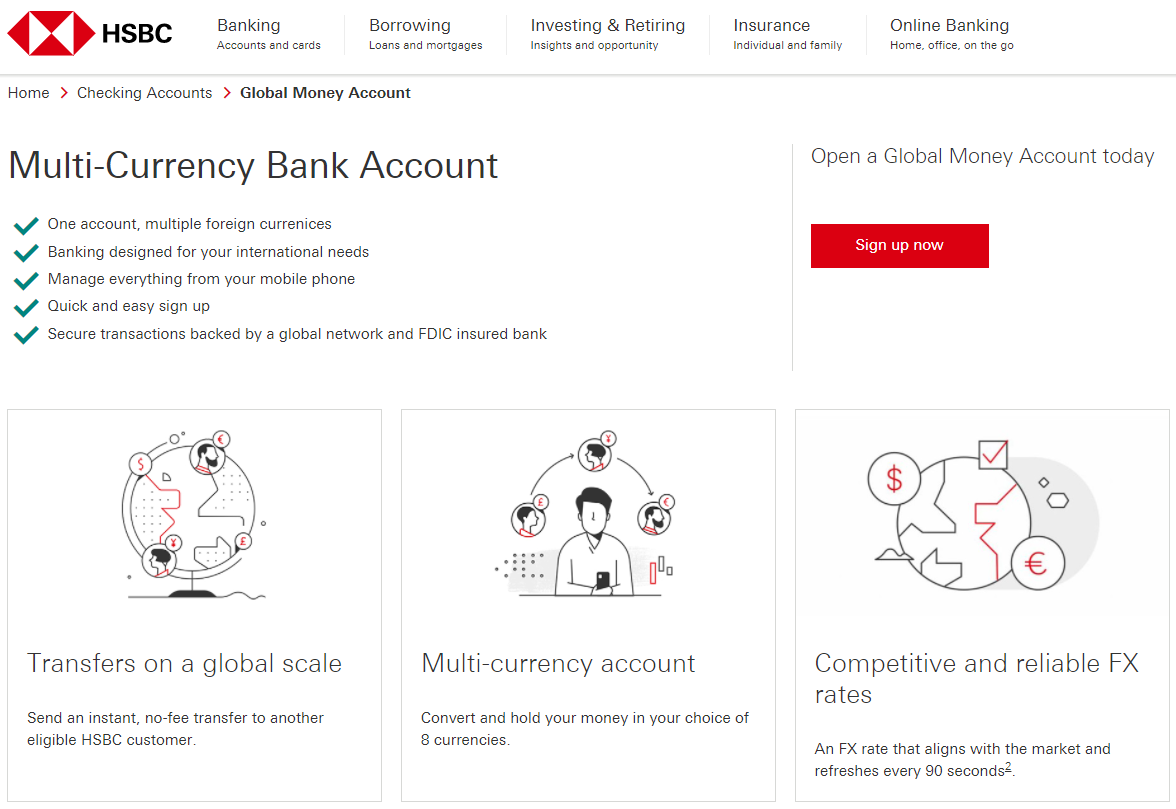
In 2020, HSBC appeared to have learned from other banks’ failures when it launched its version of Revolut’s multi-currency cross-border wallet, available only to existing customers and without separate branding.
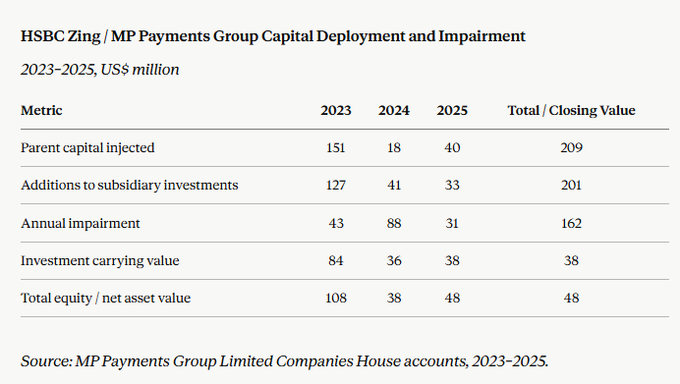
But the restraint did not last. By 2022, HSBC had begun working on Project Marco Polo, the effort that would become Zing. By year-end 2023, before the January 2024 public launch, HSBC had already injected $151M into the effort and recorded a $43M impairment. It was a two-year big-bang build whose economics were already deteriorating before customers had a real chance to vote.
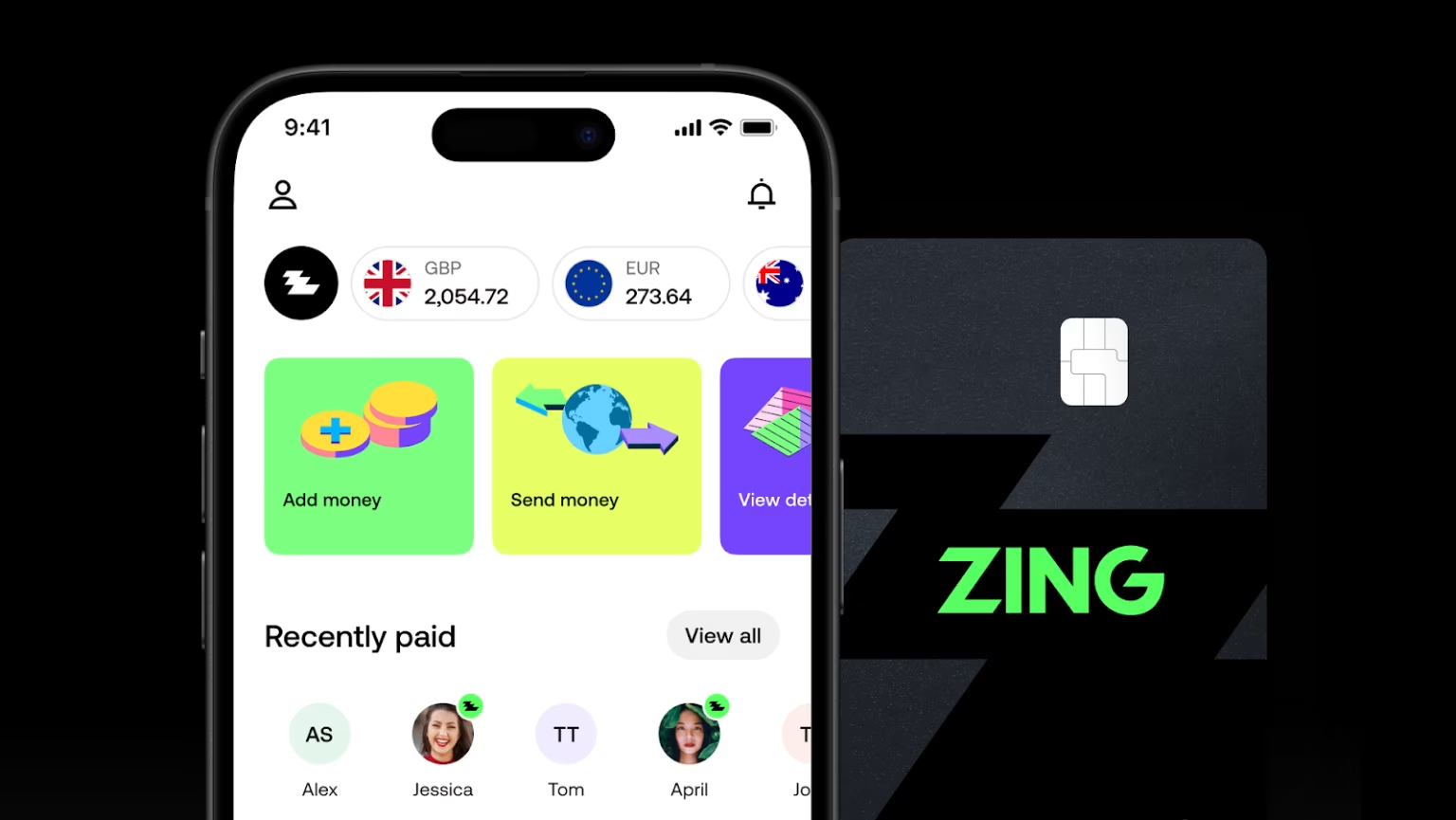
Why would consumers who are happy with Wise, Western Union, or their bank’s money transfer service flock to HSBC? Apparently, young professionals were supposed to dream of becoming “Founder Members” of Zing and receiving a limited-edition debit card.

A year later, Zing was shut down. In one regard, the results were not catastrophic. According to Financial News, Zing acquired 9,000 monthly users from a pool of 131,000 customers. The shocking part was that HSBC spent two years and $209M preparing for launch while hiring 400 employees. With $162M of accumulated impairment, most of the damage was concentrated not in customer acquisition, but in the operations/platform entity. What makes this even worse is that HSBC decided to blitzscale across multiple products and 100 corridors while, according to Financial News, failing to prioritize fraud controls in its home country:
Project Green was designed to enhance Zing’s fraud controls, align with regulatory requirements and HSBC’s anti-money laundering policies, and establish a framework for monitoring transactions, according to internal documents.
The overhaul began last summer, when staff were informed that Zing was focusing its resources on the UK market and fixing issues highlighted by the audits, a person familiar with the matter said.
Some staff working on international expansion were subsequently reassigned to work on Project Green and have not been moved back, the person added.
However, even if Zing had been competent in strategy, marketing, and compliance, its setup doomed it. Banks have a long history of failing to scale fintech subsidiaries under separate brands, especially in the unforgiving cross-border consumer transfer space. Rather than leveraging its $11B in C2C cross-border transfer volumes inside the core business, HSBC repeated the same mistake as BBVA and Santander before it.
Zing will be remembered as more than another failed bank fintech subsidiary. It was a canonical big-bang failure: two years of preparation, hundreds of employees, multi-product expansion, 100 corridors, traditional marketing, weak differentiation, and a platform build whose recoverable value collapsed almost immediately.
That is the opposite of how Wise was built: narrow wedge, ruthless cost discipline, proof before scale, and expansion only after product-market fit. Wise and Revolut raised billions only after years of milestones. Wise raised roughly $100M across six rounds over five years, by which point it was already surpassing Western Union Digital and Intermex in volume.
The final irony is that Wise later hired Zing’s CEO. Not because Zing proved anything worth copying, but because even the world’s best fintech may now be desperate enough for bank-like credibility to hire the textbook bureaucratic failure its culture spent 15 years trying to defeat.
Conclusion
Banks remain sleeping giants in consumer cross-border money transfer because they can matter without caring very much. The business is too small to reshape global incumbents, but large enough for those banks to keep serving customers who already trust them. That is why fintechs can be right about banks’ weaker pricing and service while still being wrong about bank displacement.
The market did change. Wise, Remitly, and other specialists built much better digital products and scaled faster than banks. But their growth came largely from smaller banks and MTOs. Wells Fargo’s ExpressSend shows the narrow version of what works inside a bank: serve existing customers, stay close to the core franchise and invest just enough to keep the product useful. BBVA, Santander and HSBC show the version that keeps failing: build a separate bank-owned fintech and pretend customers are waiting for another Wise or Revolut clone.
The real threat now runs in the opposite direction from the startup pitch. Money transfer specialists may dislike banks as competitors, but they still need banks as correspondents, settlement partners and risk gatekeepers. The dogs bark, but the banking caravan still moves on.
Thank you for taking the time to read our analysis. We continually update our blog articles, so we encourage you to return regularly. If you have any concerns about the accuracy or objectivity of our facts and conclusions, we welcome your feedback in the comments section below.