

“… long, sorry decline has left the 140-year-old company a shell of its former self. Today, it is fighting for its very survival. Western Union fell victim to technological advances…”
Associated Press, 1991
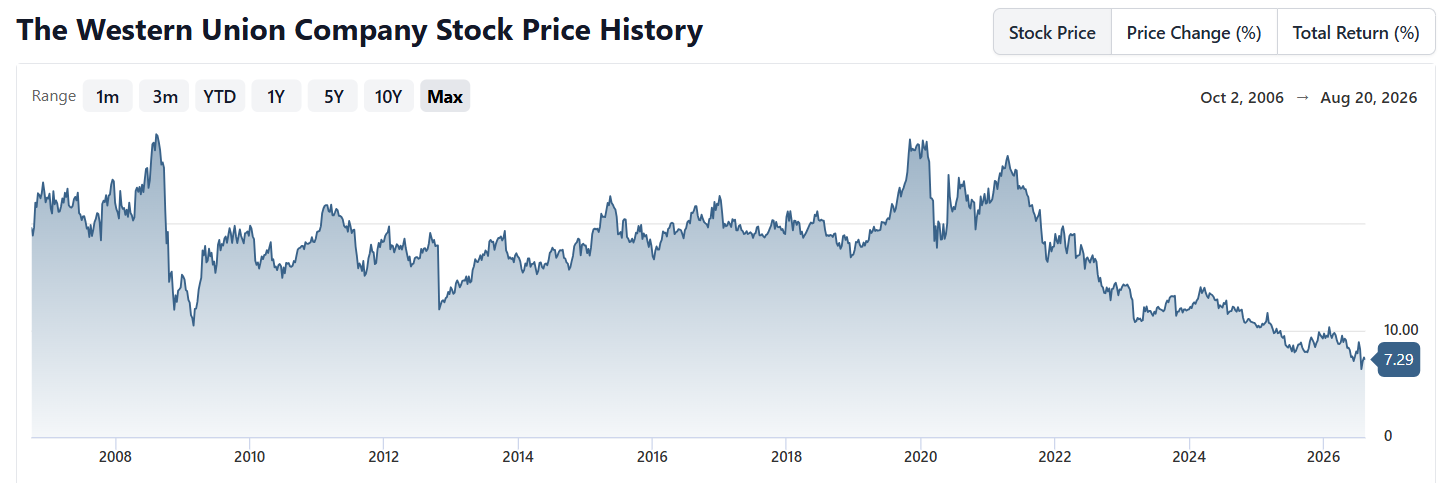
Reading current reporting on Western Union’s role in international remittances could lead us to think the company has been a successful monopoly in this space forever. Still, with the arrival of disruptive innovations (“P2P”, “Bitcoin-stablecoin“, “Social”, “Mobile”, …), it faces a real risk of imminent demise. In reality, Western Union’s subsidiary, Western Union Financial Services Inc., began offering international money transfers in 1982, following deregulation. By the mid-90s, Western Union’s coverage included major remittance destinations, such as China. In those early years, Western Union (renamed “New Valley” in 1991) faced numerous upheavals and came close to, or even entered, bankruptcy. After changing hands a few times, the money transfer subsidiary was resurrected as an independent entity in 2006. Western Union’s stock performance has been highly volatile ever since, dwarfed by the overall market:
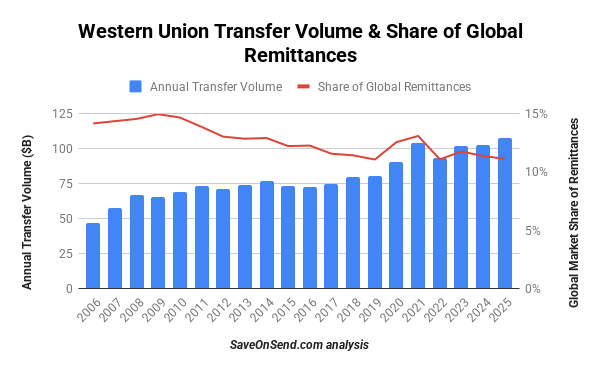
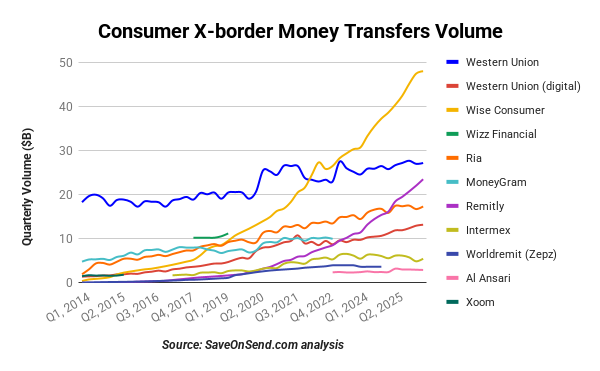
After growing till 2011, Western Union’s transfer volumes remained stagnant till 2019, even as the remittances market grew by over 40% during the same period. Volumes temporarily increased in 2020 as Western Union’s digital channels gained scale amid COVID-19 restrictions. However, despite this one-off uptick, lower margins on digital transfers kept overall revenue flat over the last decade.
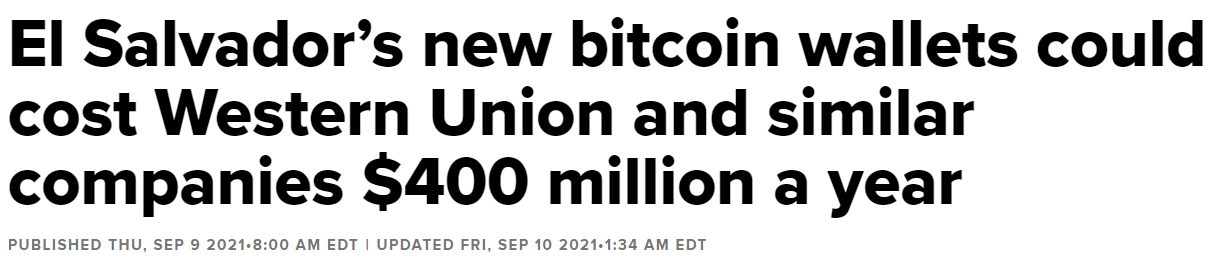
The chart understates how far Western Union has fallen because it starts in 2014. By 2026, Consumer Money Transfer revenue had fallen back to roughly 2005-06 levels. WU is moving far more money than it did twenty years ago without generating more revenue.
Western Union’s disappointing performance is no surprise, given its history of complacency about fintech disruption. In a June 2019 interview, a senior executive brushed off Fintech competition:

In a counterproductive move in 2019, Western Union closed its digital office in San Francisco as part of an enterprise-wide cost-cutting initiative to centralize activities in fewer, more cost-effective locations. Besides the extended development time for its digital strategy, Western Union also took nearly a decade to strengthen its compliance and risk management, finally settling the last FTC lawsuit in January 2017.
“Even though Western Union’s internal reports have identified agent locations where 5% to over 75% of the transactions constituted confirmed and potential fraud, and/or suspicious activities, Western Union has allowed many of these agents and subagents to continue operating, with only temporary suspensions, if any…”
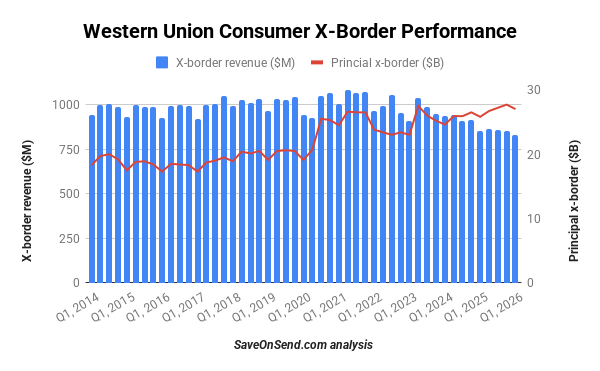
As Western Union’s valuation has declined to barely above $2 billion, its story of ups and downs has become less captivating to the media. Gone are the days of regular sensational reporting on Western Union’s likely demise, blaming it on the latest innovation du jour, be it Facebook, fintechs, or Bitcoin.
1. Western Union’s Market Share
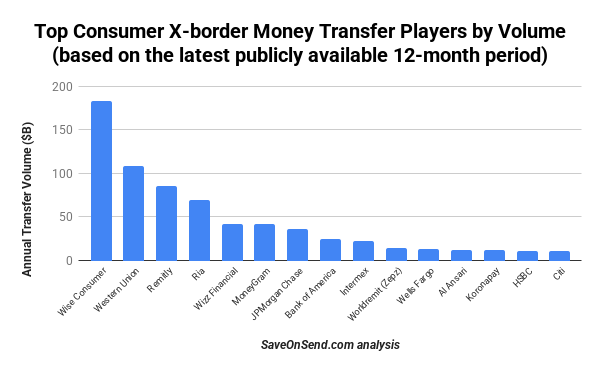
Western Union’s market share is complex, as much of the international consumer remittances market is. Since 2009, the company has gradually declined as it has struggled to keep pace with the growing, increasingly complex cross-border consumer money-transfer market.
The remittances market’s remaining share is highly fragmented, with numerous banks and MTOs of varying sizes competing in each major corridor. Western Union’s market share is also uneven across global corridors. For instance, historically, in the world’s largest remittance corridor, the USA-to-Mexico corridor, Western Union’s market share has been around 15-20%.
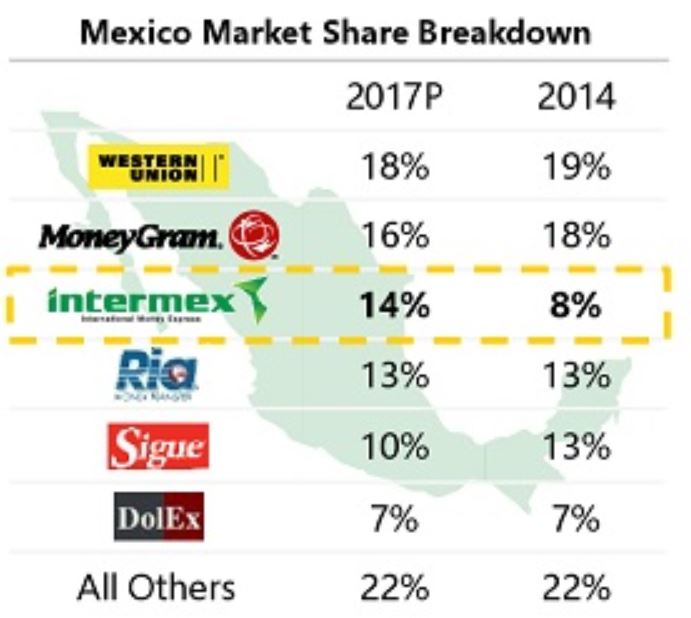
Source: SEC
Historically, Western Union’s market share has ranged from below 10% in several large corridors to nearly 50% in some smaller corridors. Criticizing Western Union for offering services in places with little to no competition is like labeling a single gas station in a small town a “monopoly.”
Africa shows what Western Union’s market-share decline actually means. Recorded remittance inflows roughly doubled over the last decade, while Western Union’s Africa-bound volume is flat to somewhat higher. Digital MTOs such as Zepz and LemFi captured a large share of the additional branded-remittance growth. Western Union lost share because the market grew much faster than it did, not because its African volume collapsed.
2. Western Union’s track record of innovation
While many Bitcoin and FinTech startup enthusiasts love to recount Western Union’s rejection of the “talking telegraph” in 1876, they often overlook that the company maintained a telegraph monopoly for the next 100 years and introduced numerous innovations during that period.
While PayPal pioneered email transfers in 1999, Western Union quickly embraced the online world in 2000, forged mobile partnerships in 2007, and launched a smartphone application in 2011—before TransferWise and Remitly were even on the scene. Despite TransferWise’s savvy use of data to drive referral traffic and Remitly’s “mobile” innovation, Western Union has been at the forefront of adopting cutting-edge technologies. Its extensive use of “big data,” exploration of a partnership with Ripple Labs, and investments in blockchain all debunk the popular narrative that labels Western Union as backward and ignorant.
Adding to its list of achievements, Western Union was the first to forge partnerships with WeChat and Viber. Why would such innovative providers choose to partner with Western Union? Scale, regulatory plumbing, integration experience, and consumer trust made it an obvious distribution partner. Those advantages were real; Western Union simply failed to turn them into the digital execution and compounding growth newer specialists achieved.

Here is how Western Union’s former CEO described the company’s approach to innovation in May 2018:
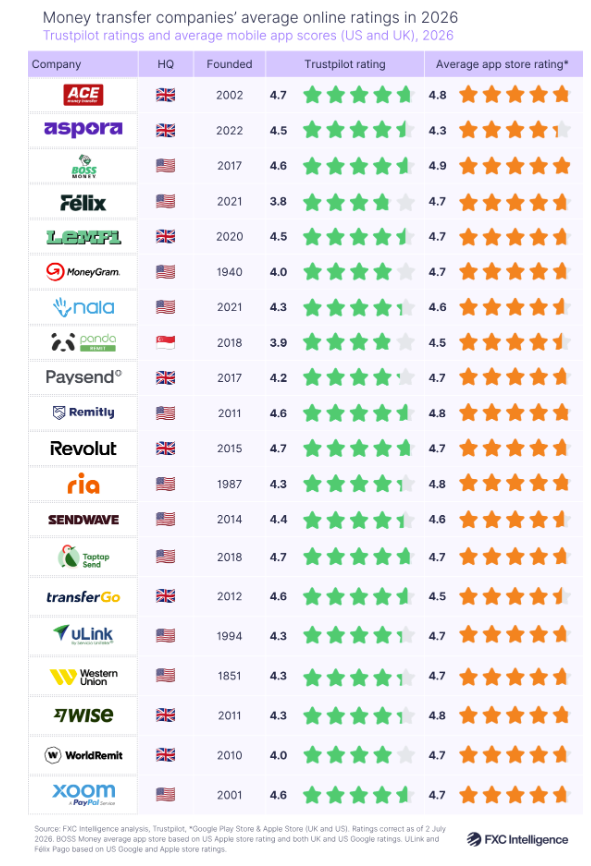
Western Union’s mobile application rating and customer reviews are also on par with leading fintechs:
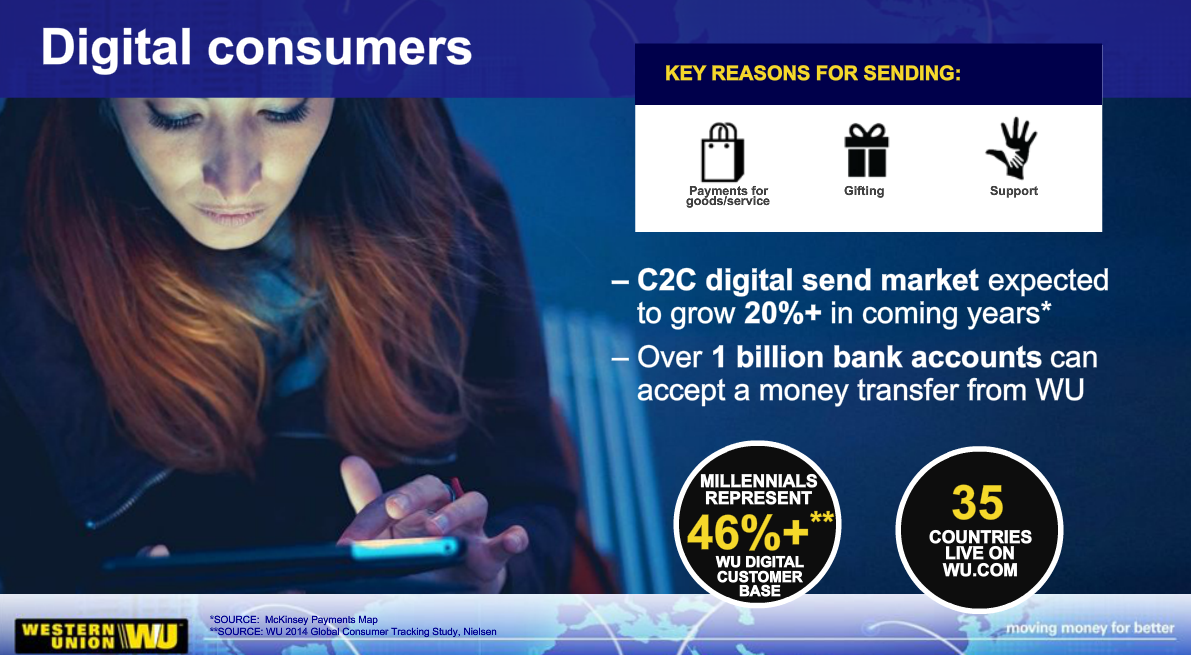
In 2017, Western Union said roughly 80% of new digital customers were entirely new to the franchise; more recently, only about 5% of new branded digital customers came from retail conversions, suggesting cannibalization has remained limited. Western Union’s own 2016 data also undercut the idea that younger consumers automatically avoided incumbents: millennials already represented 46%+ of its digital customer base.
Western Union introduced an innovative approach and achieved significant growth in online engagement by developing dedicated Facebook pages for Filipino, Indian, and Latino customers.

Western Union Celebrating 5MM Facebook “likes” – June 2015
Western Union’s digital transformation extended beyond customer engagement. Between 2016 and 2017, the company invested $120 million in “WU Way,” an efficiency program primarily focused on severance (40% of all costs) and consultants (25% of all costs). The objective was to digitize operations, consolidate offshore IT locations, and reduce staff, aiming to achieve $20-25 million in annual savings.
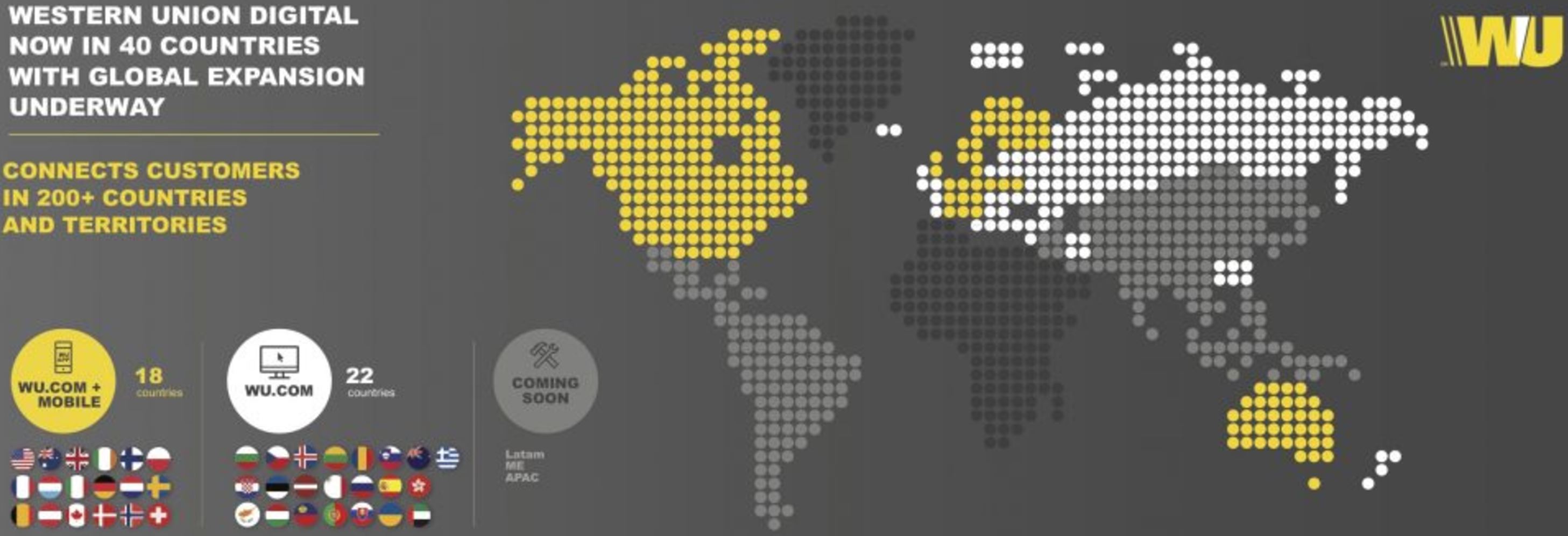
By April 2019, Western Union’s outbound digital services were available in 75 countries, with its mobile apps accessible in 35. The company expanded its digital footprint, onboarding 20 countries by 2010, 23 in 2011, only 2 in 2012-2014, 9 in 2015, and 20 in 2018. Of course, the US remained Western Union’s top focus, so despite this global expansion, Western Union’s international share of consumer cross-border revenue has remained relatively stable at around two-thirds.
By 2019, Western Union’s digital footprint covered over 95% of the world’s outbound sending countries by transfer volume. The remaining countries were either too small or subject to government regulations that prohibited online remittances. However, the main challenge for digital transfers was the slow shift in money-sender habits. More than a decade before COVID, Western Union reported that 70%+ of its customers already had bank accounts, yet it still took a global pandemic to produce a one-time acceleration in digital adoption.
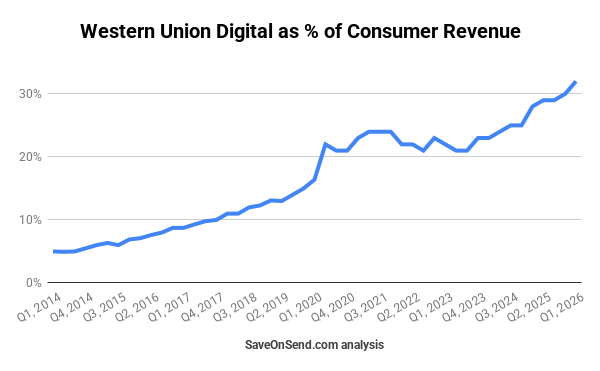
The slower adoption of digital channels in cross-border money transfers isn’t due to an inadequate digital offering but rather to significant variation in digital usage across specific corridors, or, more precisely, by ethnicity. Major migrant groups in the US, such as Indians, Filipinos, Chinese, and Mexicans, have distinct financial behaviors. For example, Indians, often in white-collar jobs, tend to have a high ratio of disclosed income. In contrast, other nationalities are more likely to be in the country without a visa and to be paid in cash for blue-collar jobs such as babysitting, construction, or driving cabs. Since regulators don’t require strict KYC for cross-border cash transfers below $3,000, this dominant segment of US remittance customers remains inclined to use offline channels.
Even before establishing a dedicated online unit, Digital Ventures, in San Francisco in 2011, Western Union’s digital business was already on par with Xoom, a digital-native competitor, in terms of transfer volumes. However, it has struggled to achieve rapid global growth. While Western Union’s digital business grew at around 20% annually until 2021, growth slowed sharply after the COVID-era surge to low- and mid-single digits, even as newer global leaders like Wise and Remitly continue to grow by 20-40%.
3. Western Union’s offline performance.
In the offline world, Western Union’s agent network expanded from 200,000 agents in 2006 to 485,000 in 2011. However, the growth rate slowed significantly; by 2017, the number had only increased to 550,000. The slowdown in adding new agents can be attributed to around 30% of existing agents already not seeing any remittances, as reported in the 2016 annual filing:
“As of December 31, 2016 , more than 70% of our locations had experienced money transfer activity in the previous 12 months”
Western Union is not unique in its business-savvy prioritization of where to offer its services. Despite fintech remittance startups’ posturing about helping the “poor” and “unbanked,” they often set up offices in the world’s wealthiest cities, targeting well-off and tech-savvy senders. These startups conveniently accuse Western Union of being a high-priced monopoly. The 2022 World Bank snapshot below illustrates the point: several of the world’s most expensive corridors were small African routes that attracted far less fintech competition.
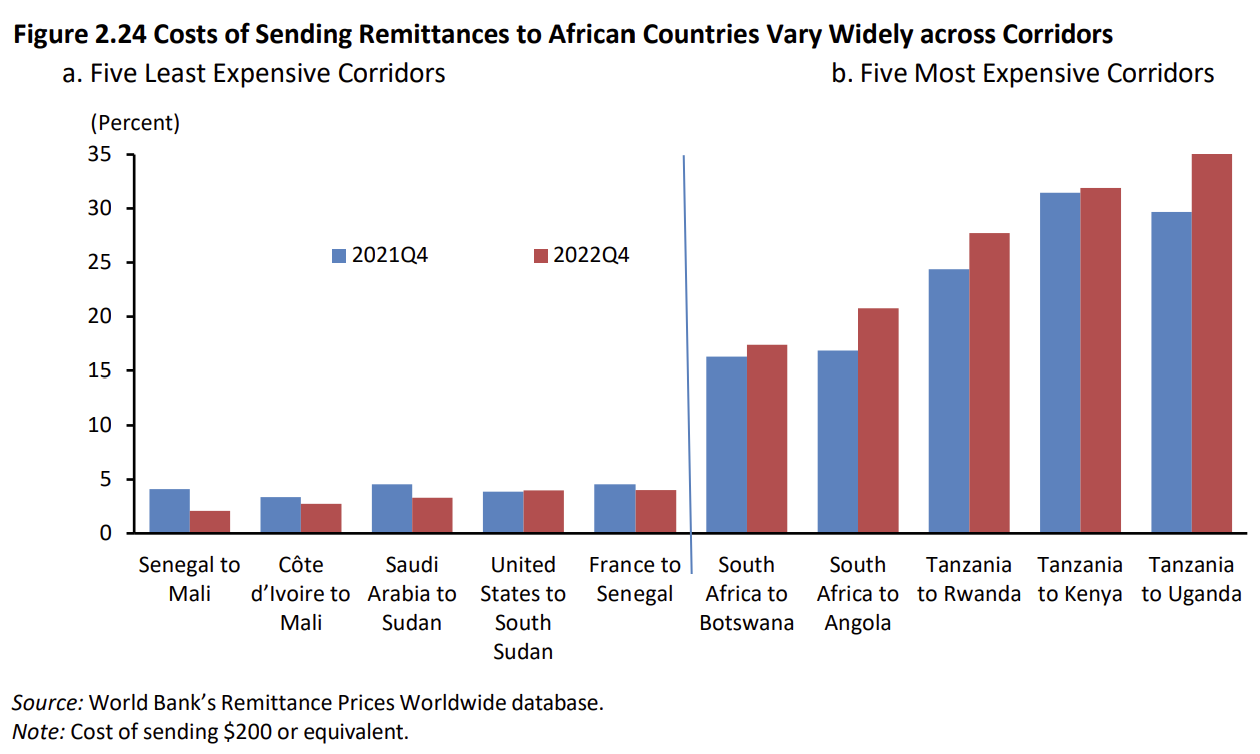
The pattern persists: in Q3 2025, Sub-Saharan Africa remained the most expensive receiving region at 8.46%, and nine of the 13 corridors costing more than 20% originated there.
Talk is cheap, and venture capitalists can be very impatient. Selecting a smaller corridor with a small percentage of tech-savvy users may not seem lucrative enough. So don’t be surprised by how Remitly’s founder explained his motivation when launching the startup in 2011 vs. what he actually did (read the full story here):
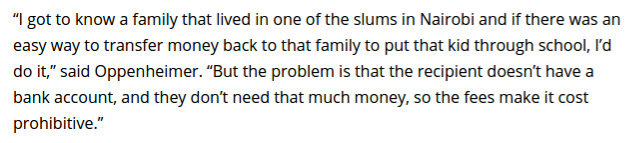
Source: GeekWire, October 28, 2011
Words like “kid,” “education,” and “Africa” were essential components of any pitch deck. Interestingly, in 2011, the only practical way to send money from the US to Kenya was to start another company. While one might have assumed Remitly would start with Kenya, remittance volumes there weren’t substantial enough, and the market lacked the desired level of tech-savviness. Instead, Remitly began its journey with the Philippines, followed by India, China, and Latin America. Years later, the company expanded its outbound business beyond the US into Canada and the UK. It took nearly a decade for Remitly to finally make Kenya one of its available destinations.
This anecdote is relevant to our question about Western Union’s leadership position, as it exemplifies a common mindset among remittance startups. Instead of challenging Western Union’s market share in areas without an online presence, these startups tend to target the same “top” corridors where Western Union’s digital business is already well established. This approach highlights the intense competition for the same customer base, which has clearly impacted Western Union’s market dominance in the world’s top destinations.
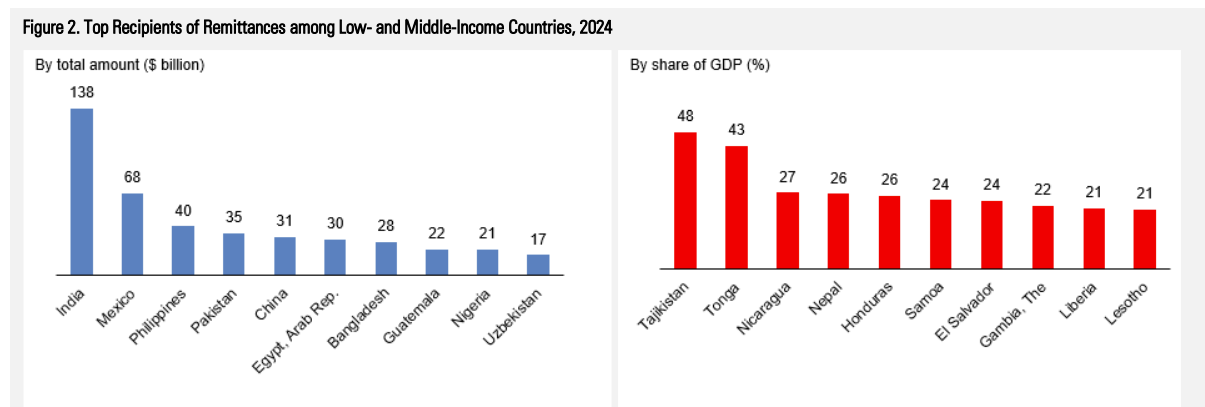
Source: World Bank
Instead of Lagos and Sao Paulo, fintechs have opened offices in Denver and New York, coming to Western Union’s home turf.

4. Western Union’s competitive zeal
Western Union’s underwhelming performance is not due to a lack of effort, nor is it limited to innovation. Historically, Western Union has sought to command a 15% pricing premium for its brand overall, but it applies significantly different margins across corridors. The company frequently adjusts fees based on transfer amounts and send-receive methods, as described by Western Union’s former CEO in May 2018:
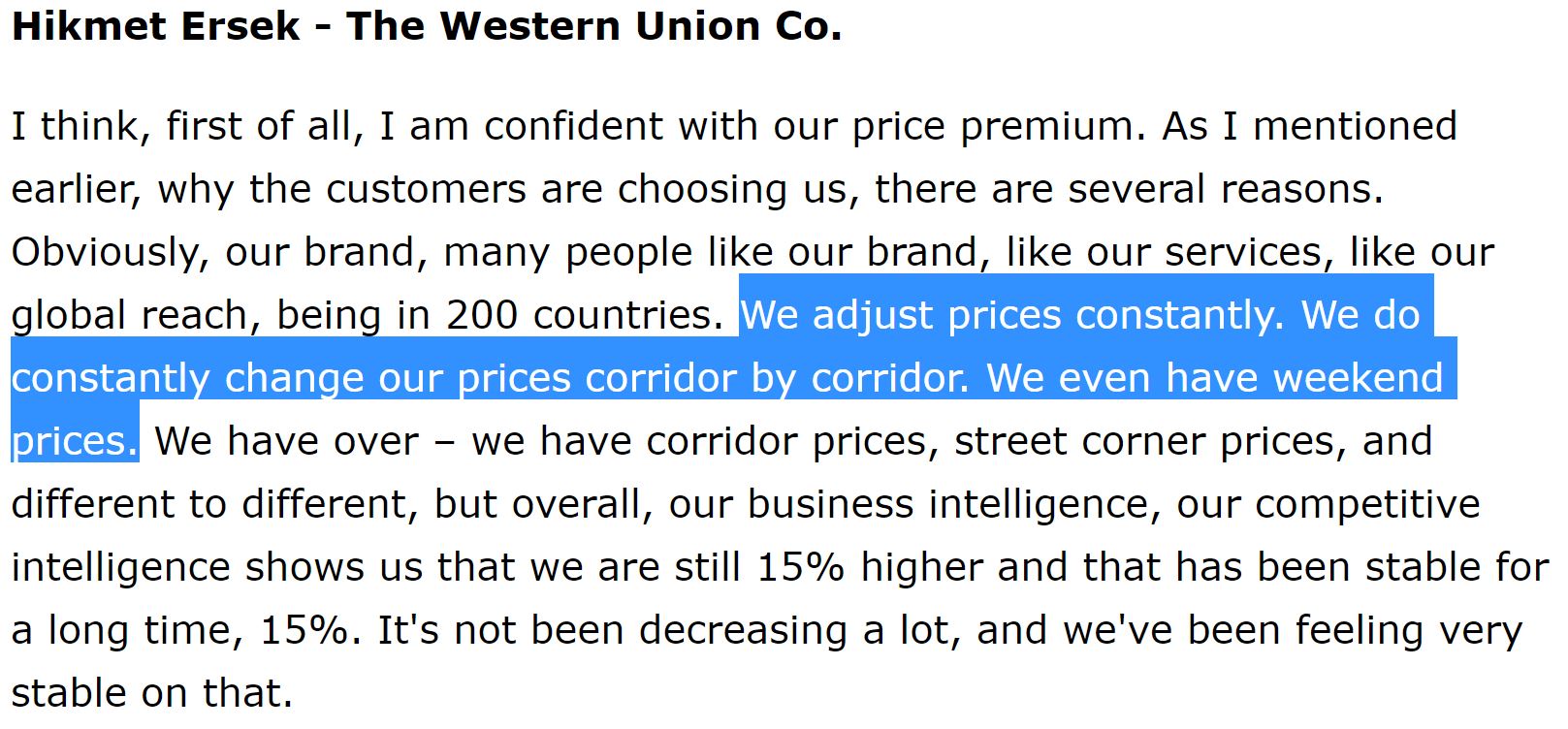
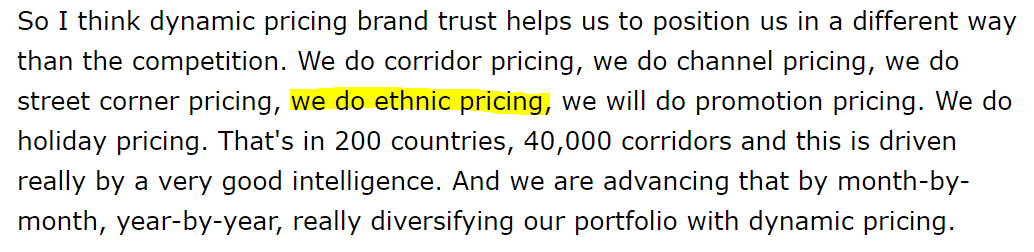
In 2020, Western Union acknowledged that it even adjusted pricing based on ethnicity, validating ethnic stereotypes about savings and comparison-shopping attitudes and showing that it uses such insights to make money at scale.
For example, Western Union’s FX markup for sending money from the USA to India was among the lowest among the competitors. Still, from the USA to the Philippines, it was one of the highest:
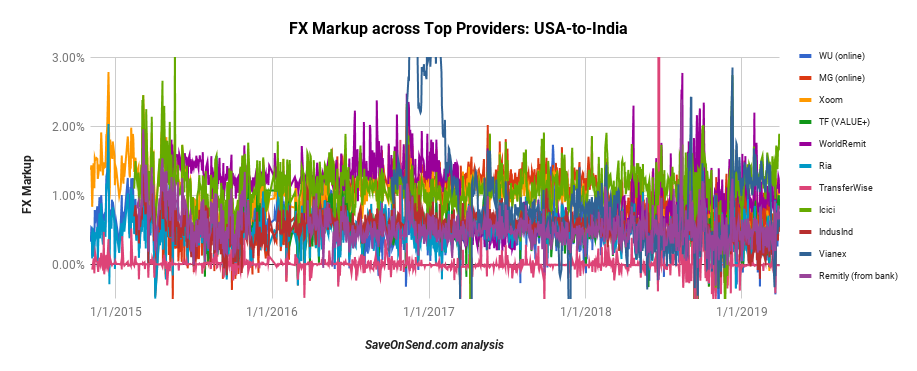

What could explain such different pricing tactics in two similarly sized Asian corridors? Because the pricing evidence above covers 2015-19, the relevant comparison is the sender mix at the time. The demographic snapshot below shows how different the major U.S. migrant groups already were.
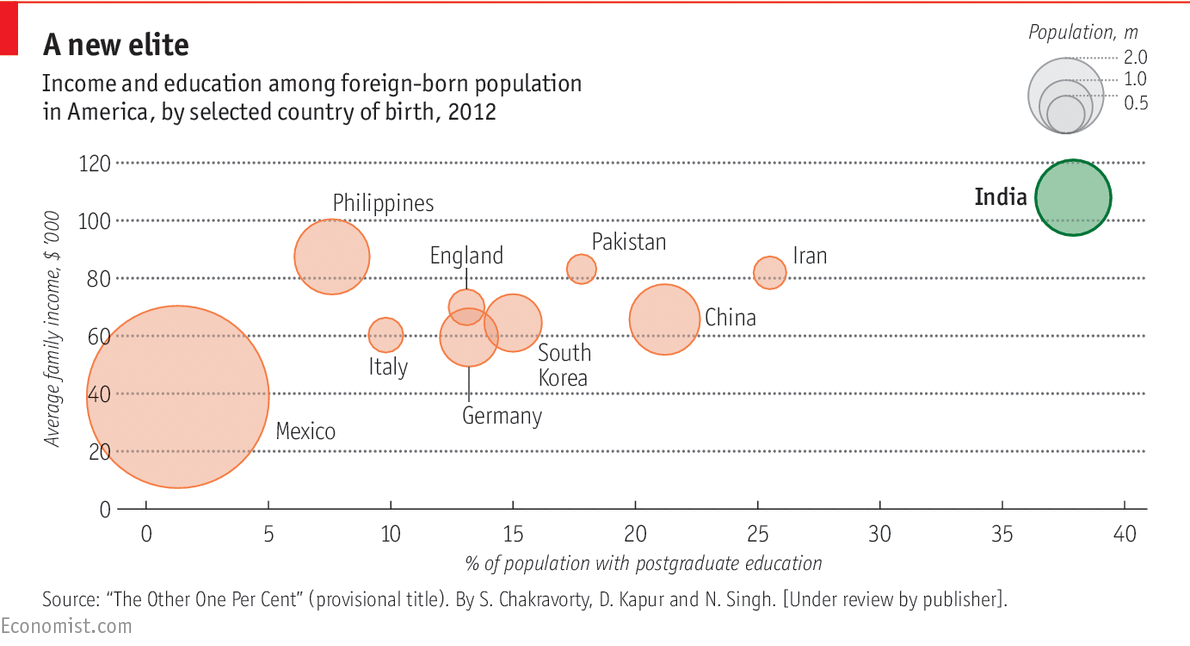
Indian immigrants stood far above most other major migrant groups in education and income, helping explain their different remittance behavior. At the time of this pricing analysis, SaveOnSend estimated that more than 80% of U.S.-to-India transfers were conducted online, with Indian senders particularly inclined to compare prices and switch providers.

Example of price-driven provider switching, 2015
In the same historical analysis, digital usage across several other migrant groups averaged around 30%, with Filipino senders from the U.S. somewhat higher.
For example, upon noticing TransferWise’s (Wise) activity in the UK in 2017, Western Union reduced margins and offered specials to safeguard its market share. With Chinese customers, the challenge lies in a culture of secrecy and mistrust of formal channels. To gain a foothold in this segment, Western Union has, at times, offered literally free transfers for some send-receive methods to gain a foothold in this segment:
“…We do have corridors, which is zero FX. We do have corridors, which are higher FX, zero fees. We do have corridors where there’s both are that. It’s really like an airline management where you fly from one destination to another destination, which seats you for use, and that’s exactly what we are doing with our teams. I think, in the portfolio management, the team is impressive. It’s really looking at every corridor, understanding the customer needs on FX side.”
5. Western Union’s Future
Investors may experience “bullish” or “bearish” mood swings, but in the long term, only actual results, revenues, and profits truly matter. If you revisit the chart of Western Union’s stock prices since its IPO, you’ll notice three significant sell-offs: one during the 2008 financial crisis, the second when Western Union warned of sharp margin reductions in 2012, and the third since 2021, reaching another new low in July 2026.
After realizing the COVID spike was temporary, investors no longer believe Western Union can thrive against fintechs in the long term. Wise, Remitly, and countless regional fintechs might not yet be poaching many Western Union customers, but they have made profitable digital growth much harder. In Q2 2026, WU’s branded-digital transactions jumped 25% while revenue grew only 6%.
Management said most of that growth came through very-low-yield Middle Eastern partners, while customers increasingly shifted from profitable cash payouts to lower-profit accounts and wallets. Some of the damage was self-inflicted: WU was still renegotiating years-old digital payout contracts and operating three separate digital platforms. The company is increasingly winning digital transactions without replacing the profit lost as retail shrinks.
Product strategy has been just as circular. Western Union spent four years trying to turn remittance relationships into broader financial-services relationships through its European Digital Bank, then shut it down in 2026 without ever building material economics. Within days, it launched StableCard, again pitching remittance customers on holding a WU-linked dollar balance and spending it through a card, this time using USDPT. The architecture is lighter, but the retention-and-cross-sell thesis is essentially the same, and WU has yet to disclose adoption or P&L.
Intermex is the clearest M&A example of the same strategic churn. Western Union’s “digital-first” strategy somehow led to a plan to pay $500 million for Intermex, a largely physical remittance player with almost no digital edge. The logic was to buy more time: add retail corridors, consolidate agents, claim customer-migration potential, and spend years rationalizing another shrinking cash-transfer footprint.
That customer-migration thesis was not entirely imaginary. In 2021, 30% of WU’s 9M+ branded-digital customers had originally started at retail, and omnichannel customers generated more than twice the revenue per customer of single-channel users. But by 2023, WU had learned that omnichannel was mostly a pass-through: only 30% of the prior year’s omnichannel customers remained omnichannel, while retail conversions generated just 5% of new branded-digital customers. Intermex effectively doubled down on a funnel WU had already found much weaker than hoped.
The bidding history made the decision look even worse. WU initially indicated $12-14 when Intermex traded at $11.83, raised its offer to $14.50 after the stock fell to $10.26, then agreed to $16 when it was near $9.28. The worse the standalone asset looked, the larger the premium WU volunteered to pay.
Intermex’s revenue, transactions, and volume were already rolling over before signing, and the collapse accelerated afterward. By 2026, Intermex was facing double-digit losses in revenue, volume, and transactions. Without Western Union’s $16 offer, Intermex would likely be trading like a broken retail remittance asset.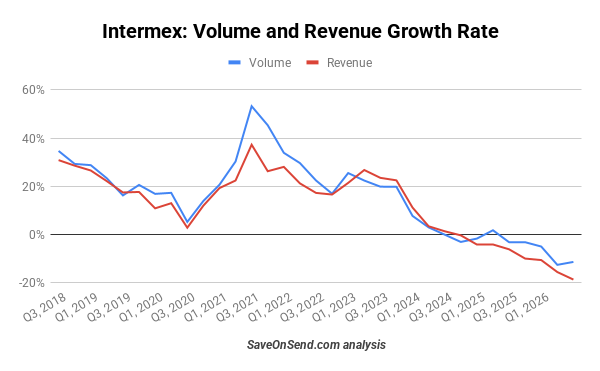
The deal suddenly became useful to NYC Mayor Mamdani, who turned it into an easy affordability-and-immigrant-community fight: corporate fee extraction, vulnerable remittance users, and disappearing competition. He failed to block it, but New York approved the acquisition only after Western Union agreed for three years to preserve relevant retail locations and services and limit fee increases roughly to inflation. The regulatory headache then moved west. On the same day New York cleared the deal, California suspended its earlier approval extension to re-examine the transaction’s impact on the state. After spending months waiting for New York, Western Union was back to waiting for another regulator.
But how did Western Union lose its dominance? Like Xoom, Western Union had an early start advantage over fintechs but failed to transform its operating model to match startups’ effectiveness. By dismissing fintechs until recently, Western Union’s leadership overlooked the compounding effect of high growth rates among those startups. When such growth happens year after year for more than a decade, a tiny startup could catch up to a leader.
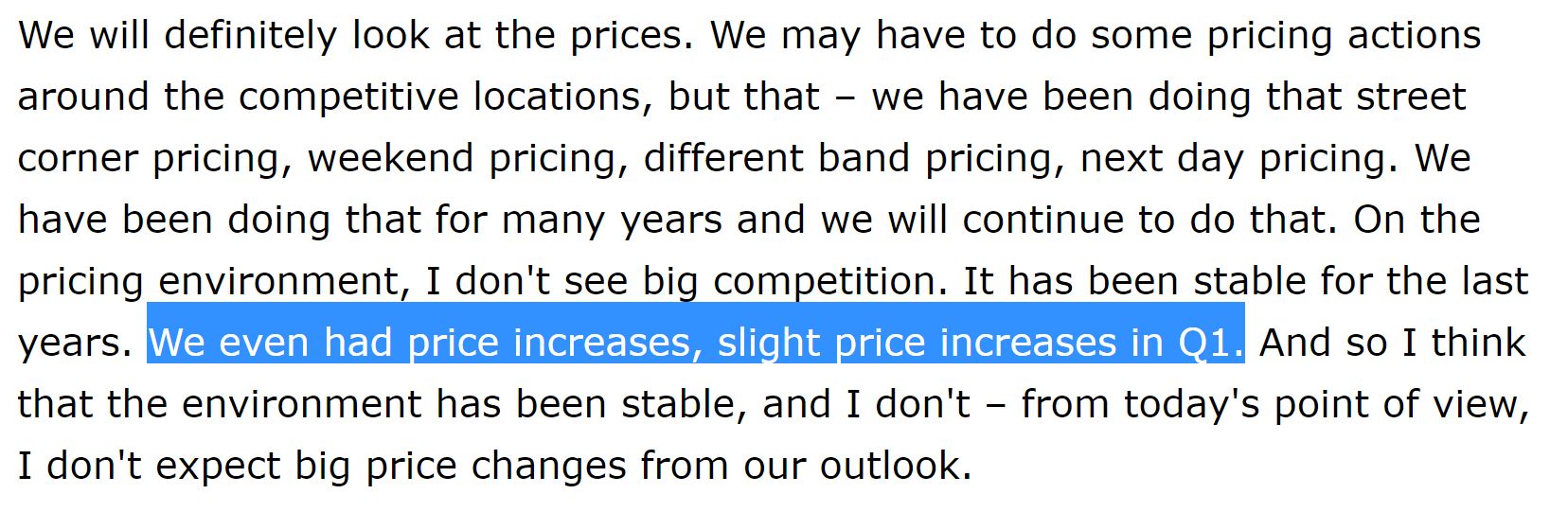
Here is again how nonchalantly Western Union’s former CEO viewed competition in 2018:
However, don’t expect Western Union’s demise anytime soon. When we see long lines at overpriced coffee shops, it seems odd to think of those consumers as victims of a traditional latte cartel that takes advantage of customers with slow, expensive service. So why should we think differently about consumers who willingly stay in line at Western Union’s cash agents, pay more for the service, and prefer that experience?

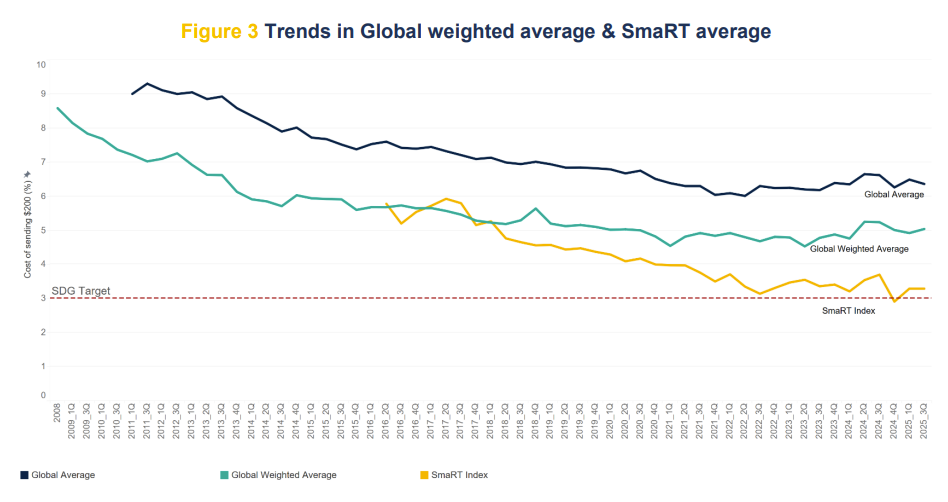
It wasn’t always the case, but today’s consumers are generally satisfied with their cross-border remittance options. Consumer remittance prices have fallen steadily: the World Bank’s corridor-volume-weighted cost of sending $200 fell by roughly 40% from 2009 to Q3 2025, reaching 5.04%, while its SmaRT benchmark was 3.29%.
Source: World Bank
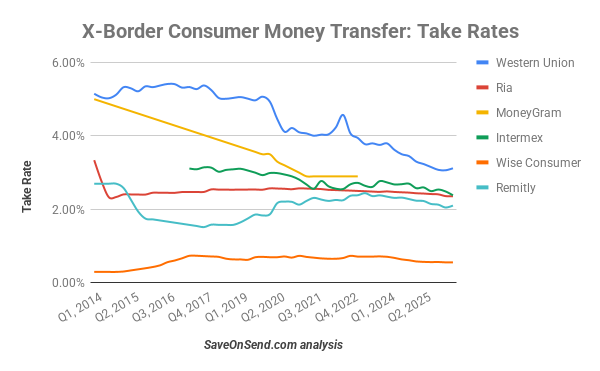
Western Union is undoubtedly, though somewhat reluctantly, part of the margin decline in the cross-border consumer money transfer industry. Its take rate remained above 5% until 2019, then gradually fell to under 3.5% as a larger share of transfers shifted to cheaper digital options. Western Union will likely continue making reluctant changes to slow the decline in market share as the future unfolds. While it’s no longer the dominant leader it once was, Western Union is not in danger of being retired into oblivion anytime soon.
Conclusion
Western Union is unlikely to disappear anytime soon. Its brand, regulatory infrastructure, global payout network, and millions of customers still make it one of the world’s largest consumer cross-border money-transfer companies. Yet permanent leadership is already gone.
The irony is that Western Union did not lose because it ignored technology. It went online early, launched mobile products before most fintech challengers existed, experimented with social platforms, blockchain and digital banking, and spent years adjusting prices corridor by corridor. It simply failed to turn those advantages into the sustained execution and compounding growth newer specialists achieved. Now its highly profitable cash business is shrinking while much of its fastest digital growth generates substantially less revenue and profit per transaction. Buying more legacy retail scale through Intermex may slow the decline, but it won’t solve the problem.
Western Union has survived predictions of technological extinction for more than a century. It will probably survive this one too. This time, however, survival and leadership are no longer the same thing.
Hopefully, you found this overview helpful in developing your own perspective on Western Union’s chances of remaining among the top players. We’ll keep this post regularly updated, so come back soon!