The foundation of PR pitches for money transfer startups centers on a relatively intuitive concept about the role of banks: they are massive institutions with bureaucratic cultures, subpar customer service, and outdated digital capabilities. Consequently, it’s only a matter of time before banks are displaced from the cross-border money transfer industry. Ironically, this premise holds. A typical bank is usually behind in service quality and pricing compared to the leading fintech startups. Furthermore, most banks don’t consider a money transfer business strategic.
Since the publication of “Bitcoin: A Peer-to-Peer Electronic Cash System” in 2008, international money transfers, although constituting a smaller portion of cross-border payments, have emerged as one of the most promising use cases for crypto.
The initial assumption was that remittance users were incurring exorbitant fees and receiving subpar service from traditional players like Western Union. The prospect of an almost cost-free and instantaneous blockchain-based solution appeared to be a much-needed relief. Additionally, it presented an opportunity for affluent individuals in Western countries to showcase their efforts toward promoting financial inclusion in developing nations.
Subsequently, many startups received funding to test this hypothesis with consumers and partner with money transfer operators (MTOs). Additionally, one country recognized this as a national priority and encouraged its citizens to explore cryptocurrency-based remittances.
Despite this, the adoption of cryptocurrencies for remittances has not increased in the last decade. Using crypto for international money transfers remains a pilot or pay-per-play. More importantly, nobody can articulate an in-depth case for using private, public, or government crypto instead of or on top of Swift + local real-time rails.
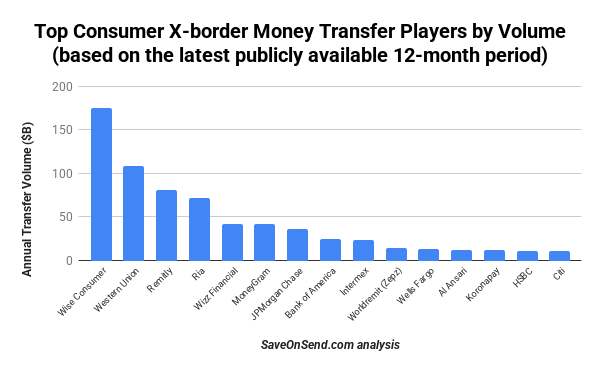
In contrast, non-crypto fintechs such as Wise and Remitly have emerged among the global leaders. What factors have contributed to crypto’s disappointing start, and will this innovative technology have a greater impact in the future?
Innovation Adoption: 3 Cases
Consumers and businesses possess trillions of dollars in disposable income that they eagerly spend on various products and services, regardless of whether those products and services are beneficial. For instance, consumers collectively spend around a trillion dollars annually on alcohol, junk food, or tobacco. Introducing genuinely innovative technology is an even more straightforward proposition. Financial services and insurance companies allocate a trillion dollars annually to technology spending alone. Apple generates $200 billion just from iPhone sales. While generative AI is still in the early phase, Nvidia’s annual sales of AI chips have already reached $150 billion. To achieve similar success, blockchain technology only needs to address one of the following three use cases:
For disruption to occur, it only takes one determined startup with a long-term vision spanning two or more decades. The disruptive force of innovation only requires one Amazon for books, one Spotify for music, and one Netflix for entertainment. After over two decades since Xoom’s founding, the first fintech in this space, two fintechs ended up ahead of the pack. More than a decade of keen observations in this fiercely competitive space has given us a reasonable understanding of what made Wise and Remitly so far ahead of others, and why some fintechs are no longer around.
“… long, sorry decline has left the 140-year-old company a shell of its former self. Today, it is fighting for its very survival. Western Union fell victim to technological advances…”
Reading current reporting on Western Union’s role in international remittances could lead us to think the company has been a successful monopoly in this space forever. Still, with the arrival of some disruptive innovations (“P2P”, “Bitcoin-stablecoin”, “Social”, “Mobile”,…), there is a real danger of its imminent demise. In reality, Western Union’s subsidiary, Western Union Financial Services Inc., began offering international money transfers in 1982, following deregulation. By the mid-90s, Western Union’s coverage included major remittance destinations, such as China. In those initial years, Western Union (renamed “New Valley” in 1991) experienced numerous upheavals, coming close to or even entering bankruptcy. After changing hands a few times, the money transfer subsidiary was resurrected as an independent entity in 2006. Western Union’s stock performance has been highly volatile ever since, dwarfed by the overall market:
“…to date MoneyGram has refused to open a meaningful dialogue with us, leaving us no choice but to make this proposal public…”
Euronet CEO’s letter to employees, December 13, 2007
In the past, MoneyGram and Western Union were often referred to as the “monopolies” of cross-border money transfers. However, MoneyGram’s valuation was significantly smaller than Western Union’s and had a multiple below that of any competitor at that time.
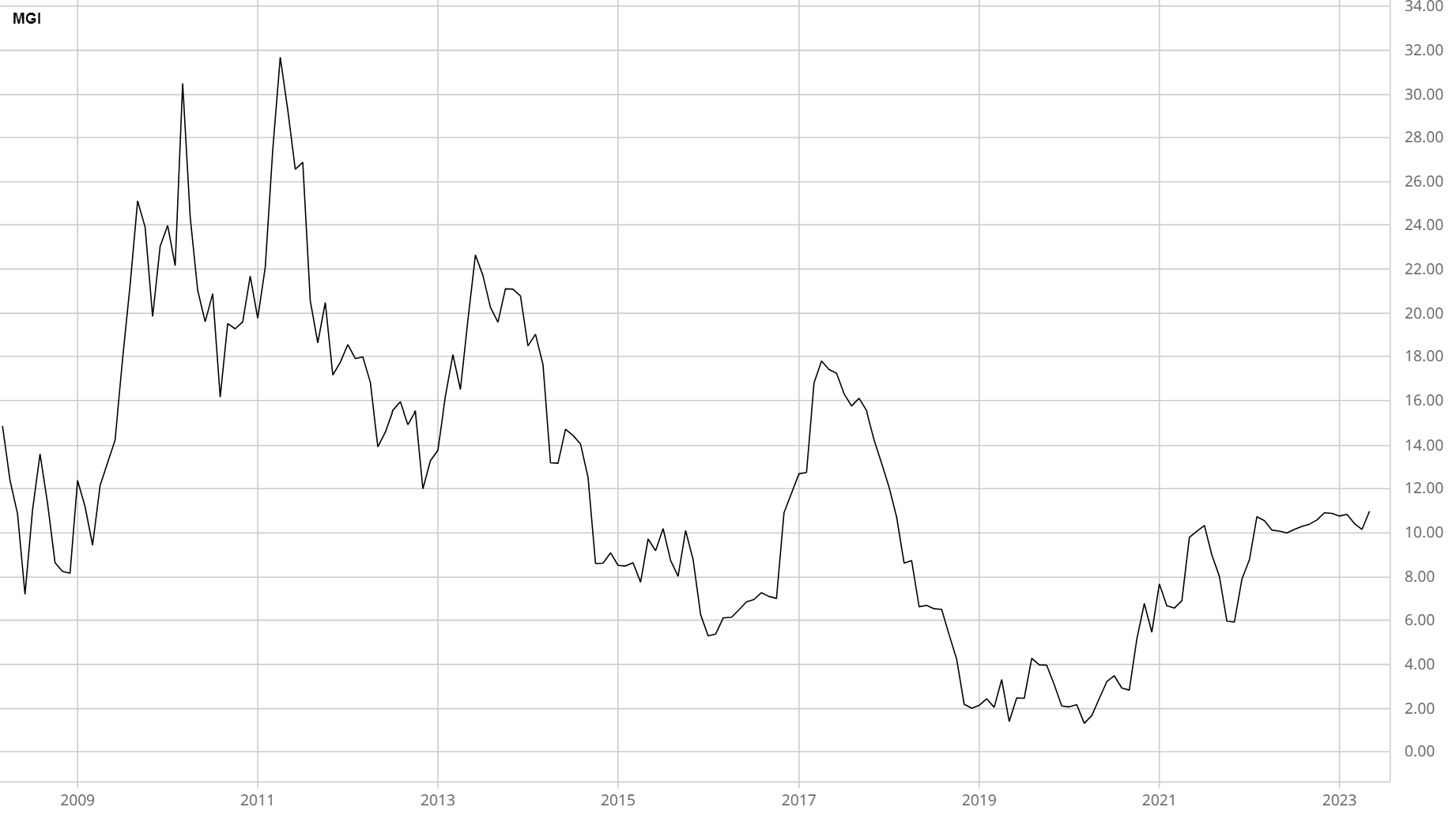
MoneyGram’s valuation had been erratic since its IPO in 2004, even reaching near-zero levels in 2019 and 2020, until it was finally acquired by a private equity firm, Madison Dearborn Partners, in 2023:
Throughout its history, MoneyGram has stood out as the most irrational player in remittances, defying the stereotype that incumbent financial services companies are too conservative. The only explanation for such behavior could be the curse of an eternal “silver medal.”
Advertising Disclosure: SaveOnSend.com is an independent, advertising-supported comparison service. SaveOnSend may be compensated in exchange for featured placement of certain sponsored products and services, or your clicking on links posted on this website.












Recent Comments