

“Xoom…. think Western Union without the excessive fees…”
TechCrunch, Sep 28, 2007
Xoom’s two-decade-plus history is full of missed opportunities and second chances. The child of the so-called “PayPal Mafia” and protege of Sequoia Capital, Xoom was founded in 2001 to disrupt cross-border remittances. At that point, Western Union already had a website where customers could initiate and track money transfers, but it was clunky and saw little use. The shift to online remittances was expected imminently, so creating an online-only provider with a better user experience was a no-brainer.
The early years
The Xoom website was formally launched in 2003…
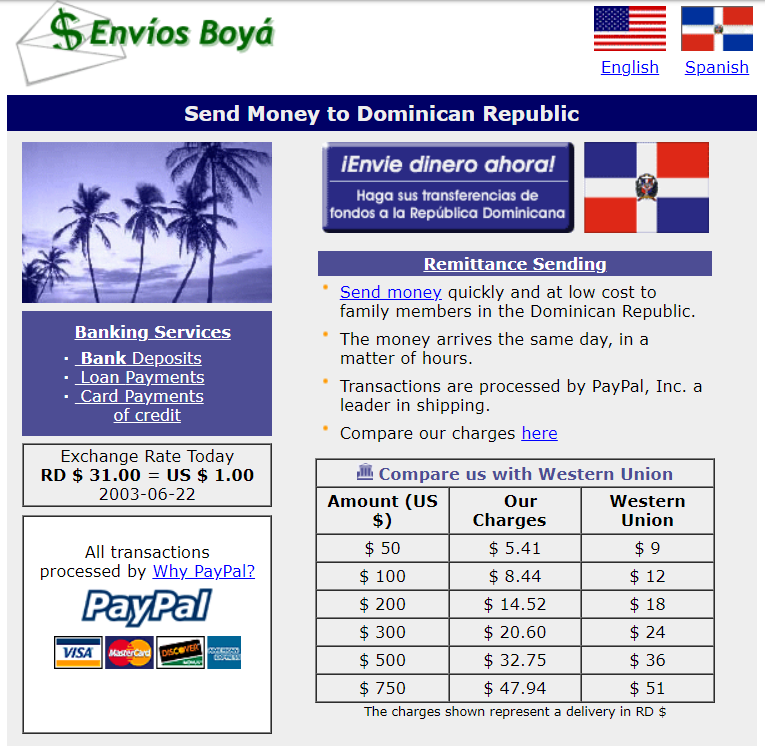
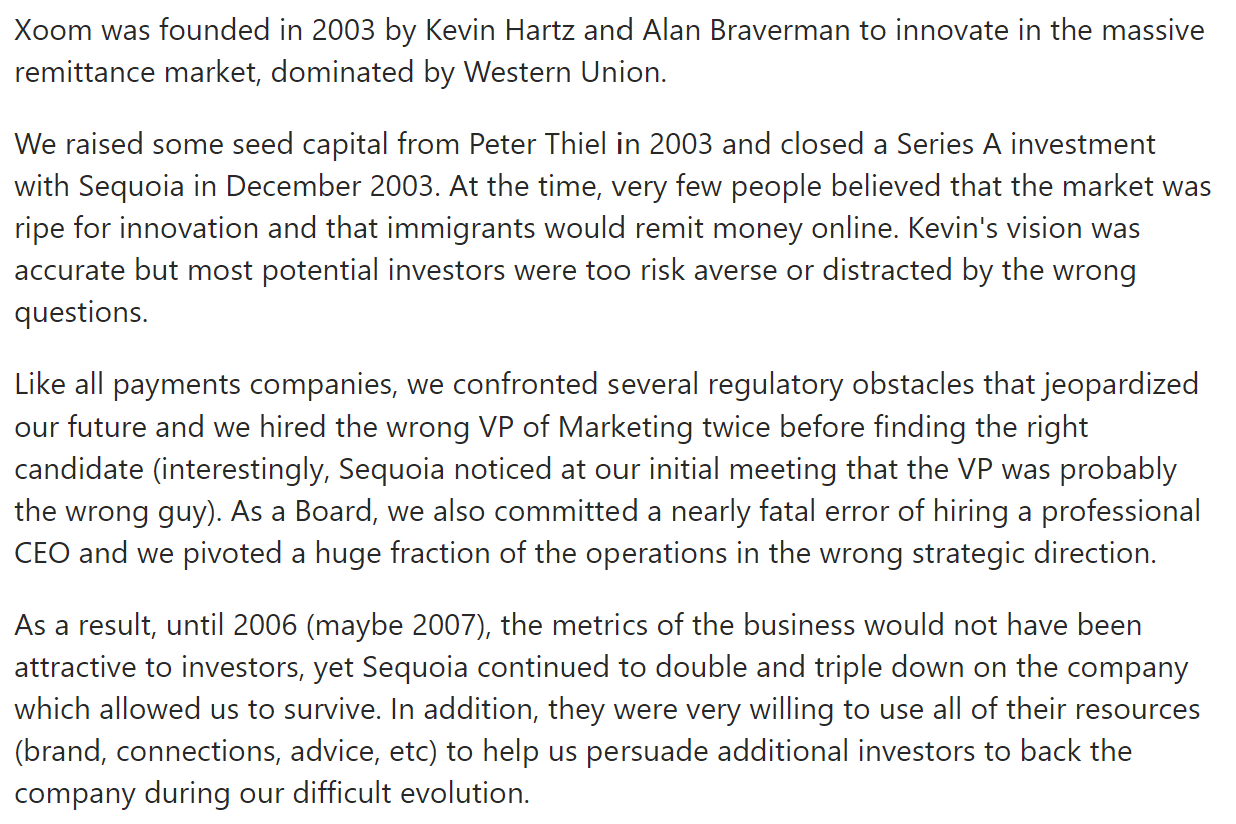
… and its troubles began in its first years, with frequent hiring mistakes and the allocation of significant resources to a B2B pivot that ultimately failed. In 2010, Keith Rabois, an early investor and Board member of Xoom, provided this summary of the early years:
By 2007, six years and five funding rounds later, Xoom had evolved into the business model it is known for today: digital-only instant money transfers and a great user experience. During those early years, Xoom remained a relatively small company, with revenues under $20 million, compared to Western Union’s $3 billion. However, the growth strategy was clear and straightforward: persuade customers in as many corridors as possible to try its application.
In the subsequent years, Xoom accelerated its growth, tripling revenues from $26 million in 2009 to $80 million in 2012. Thanks to its strong performance and inclusion on the “Top 50” VC-backed companies list, Xoom was well prepared for an IPO. On the first day of trading in February 2013, Xoom’s stock surged by nearly 60%.
Hitting the wall
The IPO timing was impeccable, coinciding with Xoom’s growth slowdown that year. The deceleration was slight in 2013 but became more pronounced in 2014.
With each quarterly result, it became increasingly evident to investors that Xoom wasn’t positioned to become the “next big thing.” The company’s stock plummeted, falling below its IPO price.
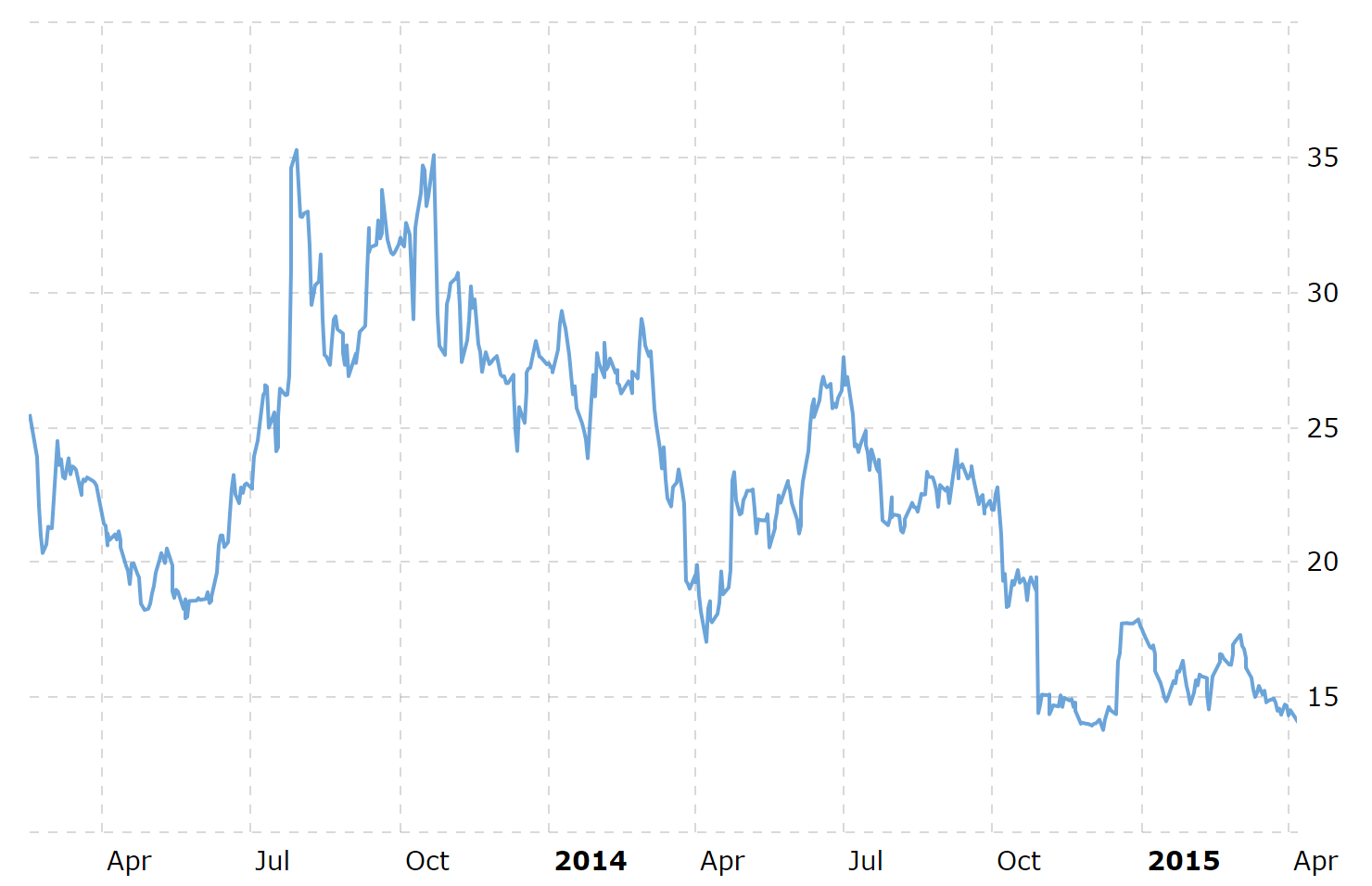
To compound the challenges, Xoom experienced a massive fraud case in late 2014. Xoom disclosed a $30.8 million corporate email/finance department fraud in late 2014; importantly, this was not customer transfer fraud, but it still damaged investor confidence. More crucially, in 2015, the company’s money transfer volumes entered negative territory every other quarter.
Xoom became the slowest-growing digital cross-border money transfer provider among notable players, including the digital divisions of Western Union and MoneyGram:
Xoom today
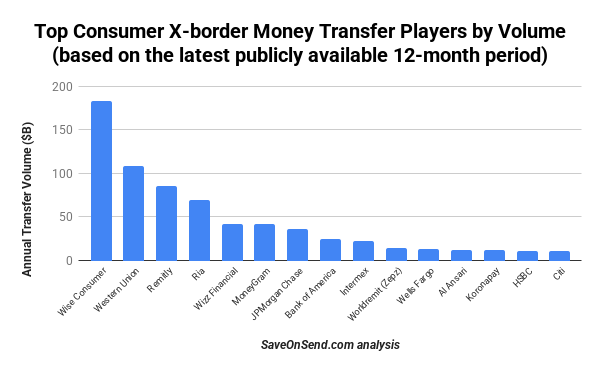
This brings us to Xoom’s current state. The company remains a marginal player in cross-border remittances. Its transaction volumes lag significantly behind those of leading traditional incumbents and newer fintech competitors, such as Remitly, which entered the market a decade after Xoom.
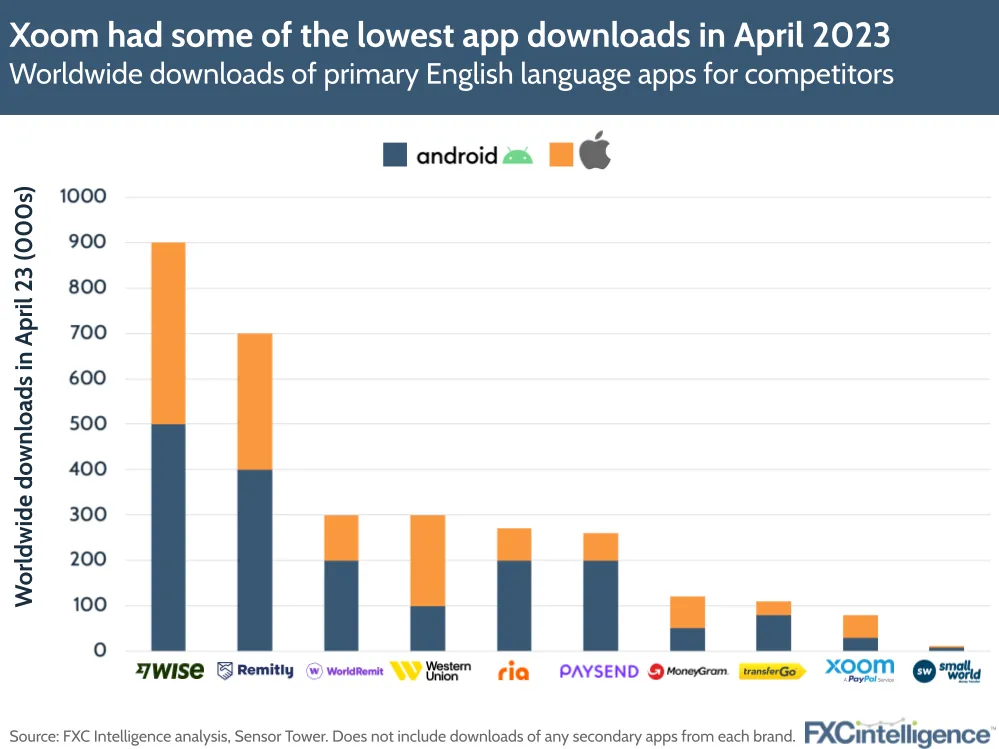
Two newer fintechs, Wise and Remitly, have achieved remarkable success. While Wise focused on the non-remittance side of cross-border money transfers, Remitly operates in the same niche as Xoom. It surpassed Xoom’s transfer volumes in 2021 and, by 2025, became the largest sender out of the US, beating Western Union, Wise, and JPMorgan Chase, with 2-3x Xoom’s volumes.
Why has Xoom not succeeded in becoming the primary disruptor or achieving a position among the top 10 global players?
Running fast was not fast enough
Xoom did many things right. Recognizing the importance of robust risk management, the company leveraged customer data to achieve an approval rate of over 90% for transfers linked to customers’ bank accounts, a remarkable achievement at the time. Moreover, Xoom understood the drawbacks of relying solely on online marketing to build credibility with migrants entrusting a new provider with their money. To build trust, Xoom invested heavily in traditional TV advertising and tailored its commercials to resonate with diverse ethnic groups, demonstrating a nuanced understanding of its target audience.
Xoom also recognized that pricing was not a critical factor for many migrants, so it was often one of the more expensive providers in the market.
Moreover, Xoom continually games its FX markups to maximize profits, often at the expense of customer peace of mind. Unfortunately, this practice is common among other providers such as Western Union and MoneyGram, though it’s less prevalent with Remitly and WorldRemit and is not an issue with Wise.
So, why did Xoom hit the wall in 2015? The macro context shifted, and the company failed to adapt. Until 2013, many tech-savvy, price-sensitive customers were shifting from expensive wire transfers to remittance providers. These customers, primarily migrants from India or younger European expats, required only a slight push to try out a widely promoted service. However, once this surge of unmet demand was met, digital players like Xoom had to figure out how to alter an individual’s preferred sending method or attract entirely new customers amid growing competition from other digital providers.
Price was starting to matter
The most widely recognized strategy for gaining market share in a fiercely competitive, uniform environment is to offer lower prices. However, Xoom aimed to maintain its high profit margins; other providers, including incumbents, reduced prices in specific corridors, with a noticeable impact (e.g., USA-to-India). Eventually, Xoom reluctantly followed suit: its foreign exchange markups from the US to India dropped to half of those to China, Mexico, and the Philippines. However, this adjustment proved insufficient. The CEO of Xoom elucidated the loss of market share in this corridor during the Q1 2015 earnings call on April 28th (for the complete transcript, find the source here):
“I think what’s going on in India is this, starting in Q3 (2014)… we’ve seen one or two or three names selling rupees between 30 and 70 basis points, and those names include Ria, MoneyGram primarily… it’s hard to see how they can consistently stay down at those rates. But, of course, competition can behave irrationally if they want to.”
However, another quarter passed, and all providers further reduced their margins to even lower levels. Below is a comparison of the change in foreign exchange markups between April 11 and August 11, 2015:
Naturally, faced with the risk of being completely excluded from this critical digital remittances corridor, Xoom had to change its approach. Right after that April 28th statement, the company swiftly dropped its FX markup to all-time lows:
However, since many other providers also followed suit (for instance, TransferWise reduced its fees for this corridor by 40% in October 2015), Xoom’s fees remained significantly higher than those of its top competitors. This led to an additional loss of market share, as indicated in Xoom’s Q2 2015 report released July 29, 2015:
“For example, our competitors have offered coupons for free money transfers and, in India, have offered better exchange rates than we have in certain periods and established no fee services. As a result, we have experienced attrition of rate-sensitive customers, particularly those customers who send money transfers to India.”
Operating on a 1% margin and losing market share underscores the competitive nature of digital remittances. But how were Xoom’s competitors able to “behave irrationally”? At that time, traditional players still conducted 90% of their business through higher-margin cash agents. Meanwhile, fintechs like TransferWise and Remitly had more streamlined operating models, enabling them to pass savings on to customers.
In late July 2015, Xoom adopted a peculiar advertising strategy of frequently promoting “best ever” rates to stem the tide of market loss. These rates were deemed “best” not due to a reduction in Xoom’s FX markup, but simply because of a higher dollar-rupee exchange rate prevailing in the market at that time:
Xoom’s market share decline within the crucial USA-India corridor persisted. In response, the company reduced FX margins for transfers exceeding $2,000 in August 2017. The irony of this threshold was apparent, given PayPal’s CEO, Dan Schulman, nauseatingly preached for financial democratization to combat poverty at every opportunity at the time. While virtue signaling is often the end objective of Western executives, rather than fostering genuine change, it also redirects media attention away from the company’s actual profit-generating methods:
America First backfires
Another factor contributing to the Xoom slowdown was the limited number of corridors it had launched by early 2015. Serving 37 countries outbound from the US seemed respectable at the time, especially since US residents account for around 20% of the world’s remittances. However, this coverage was incomparable to the extensive digital remittance network offered by incumbents like Western Union (SaveOnSend article for more details):
Remittance startups like TransferWise and WorldRemit also surpassed Xoom in the number of corridors they serve. Initially, Xoom’s operating solely out of the US might have been a logical strategy, given the substantial growth potential in the world’s largest outbound market. However, this approach did not align with investors’ scaling expectations for a high-flying fintech IPO. Xoom’s management appeared fatigued and unwilling to accelerate growth, experiment, and learn new operating muscles.
White knight on a white horse
The news of PayPal’s acquisition of Xoom wasn’t entirely unexpected. Xoom’s leadership and board members knew their circumstances and had tried to sell the company since mid-2014, reaching out to potential buyers without success. Given Xoom and PayPal’s shared origins, as well as their investors and board members, the merger was anticipated.
However, the acquisition details were astonishing: PayPal paid an 80% premium for a company experiencing a rapid performance decline. By early April 2015, Xoom’s stock had stabilized at around $14, but acquisition rumors were beginning to drive its price higher. This trend continued even after the disclosure of Q1 2015 results, which revealed a mere 6% year-over-year growth in transfer volume, far below the previous year’s 49%. Typically, stocks that surge due to acquisition rumors are purchased at their value on the day of the acquisition. However, PayPal unexpectedly paid an additional 20%+ premium on top of the already massively elevated stock price.
Moreover, although there was no single alternative bidder, PayPal didn’t try to negotiate Xoom’s asking price. Finally, because PayPal was roughly 40 times larger than Xoom, it had no urgency to pursue this acquisition. Instead of moving forward, they could have waited a couple of quarters to see whether Xoom could reverse the slowdown in growth. Just imagine where Xoom’s stock price might have been after the company announced a decline in transfer volumes in late July 2015.
What could have been the rational reason for the above? According to PayPal’s CEO:
“Acquiring Xoom allows PayPal to offer a broader range of services to our global customer base, increase customer engagement and enter an important and growing adjacent marketplace. Xoom’s presence in 37 countries – in particular, Mexico, India, the Philippines, China and Brazil – will help us accelerate our expansion in these important markets.”
Each point in that statement was misleading:
- PayPal was already offering cross-border money transfers to consumers and didn’t need Xoom to start offering this service. By maintaining a relatively high FX markup, PayPal had chosen not to compete aggressively in this space. That’s why Xoom planned to continue operating as a “separate service” after PayPal’s acquisition. Why wouldn’t PayPal offer the convenience of a single platform for all possible customer needs? Like its approach to separating Venmo, PayPal wanted to preserve high margins on its core business-related transfers.
- The same story applies to “increase customer engagement.” Xoom was losing market share, and even among its existing customers, the average transfer amount had dropped 17% compared to a year before the acquisition. How exactly could PayPal’s customer engagement benefit from this track record?
- Finally, Xoom had no real presence in other countries in 2015. Unlike providers with local field offices, Xoom had contracts with local banks or retail chains to distribute funds and, in some countries, worked through 3rd parties like Earthport to provide that service. How would those contracts with Xoom “accelerate” PayPal’s expansion in those markets, and why wouldn’t it just sign agreements with intermediaries like Earthport? Wouldn’t that ensure much faster expansion and be cheaper than spending almost one billion dollars on Xoom?
The more plausible explanation is timing. PayPal was separating from eBay and needed a clean, independent company growth narrative: mobile, Venmo, merchant payments, and now global remittances. Xoom gave PayPal an instant remittance story: 1.3 million active US customers, roughly $7B of annual volume, and 37 receiving countries, even though the operating data already showed slowing growth.
Xoom’s performance since PayPal’s acquisition
In 2016, Xoom’s revenue reached approximately $185 million, representing a less than 10% increase over the previous year. By November 2017, Xoom tried to spin its performance positively, citing vanity metrics while withholding details on revenue or transfer volume. Behind this lackluster growth was an increasingly odd focus on outbound corridors from the United States.
During that period, Xoom expanded its coverage to 67 destinations, adding one destination in Q1 2017 and 11 more in Q2 and Q3. However, all were limited to outbound transfers from the US. Can you guess the impact of adding the 67th country, outside the US, even assuming a massive 20% market share? Less than 0.5% in additional transfer volume.
Only in December 2018, more than a decade after formally focusing on remittances, did Xoom launch its second outbound country: Canada. Xoom didn’t announce the addition of 32 European countries until July 2019. In contrast, newer fintechs added outbound countries in less than half the time.
For example, the integration with PayPal has taken almost a decade. It took 11 months after completing Xoom’s acquisition, with PayPal finally announcing integrated workflows in October 2016, supposedly offering Xoom as one of the transfer options to its customers:
In reality, PayPal customers would observe more transfer options on the initial screen. However, for the actual transaction, they would still need to use a separate Xoom application.
With Xoom’s stagnant business performance, PayPal stopped sharing valuable data and instead relied on vanity metrics such as Net New Actives (NNA). The most revealing moment came in Q3 2020, when an analyst directly asked how Xoom was doing. PayPal said it did not call out Xoom’s volume metrics and that Xoom was still “a pretty small part of our overall volume.” As years went by, Xoom’s financial results remained stagnant, while the price and quality of its offering remained among the worst among digital competitors:
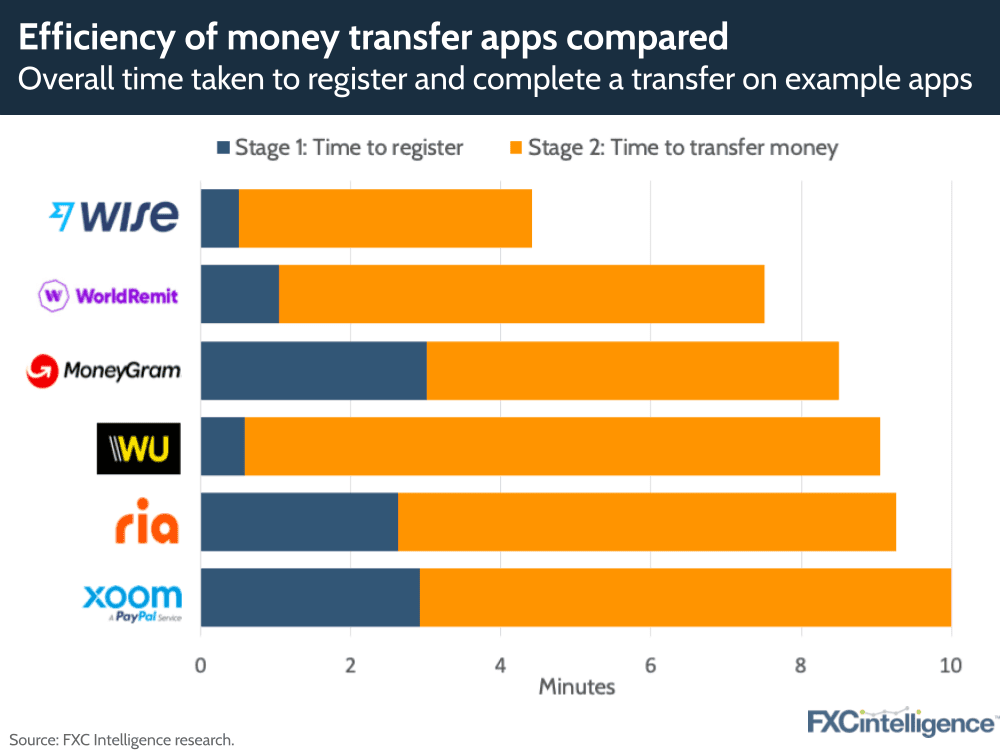
The later expansion only made the failure more revealing. PayPal eventually did broaden Xoom’s footprint: by 2023, FXC Intelligence counted Xoom transfers to 163 countries from 39 send markets, plus added capabilities such as send-to-card, domestic US transfers, mobile-wallet payout, and in-app send/request features. Yet the broader platform still did not turn Xoom into a strategic-scale remittance business. Coverage couldn’t address the underlying gaps: PayPal’s lack of focus, weak integration, pricing, and inability to make Xoom central to its core consumer-payments franchise.
By late 2023, PayPal’s stock had fallen roughly 80% from its peak; Alex Chriss had replaced Dan Schulman. Reports surfaced that PayPal had hired Goldman Sachs and worked for several months on a possible Xoom sale, under pressure to refocus PayPal’s growth story.
Almost a decade later, PayPal was still presenting Xoom integration as a transformation milestone. At its 2025 Investor Day, PayPal’s CTO explained that acquired products had historically run on independent platforms, slowing product velocity and fragmenting customer experience. His first example of the new “One Platform” push was Xoom: PayPal and Xoom were now “unified,” making it possible to send foreign remittances through the PayPal app with no Xoom login required.
By 2026, with no sign of a Xoom turnaround, PayPal changed CEOs again. Xoom now looked even less like a strategic asset PayPal could monetize anywhere near its original purchase price. While Wise and Remitly were valued at roughly $13 billion and $5 billion, respectively, it was unclear if PayPal could recoup its original $1 billion investment.
Xoom jumps on the crypto bandwagon
The crypto subplot had begun earlier. In August 2023, PayPal announced the launch of its stablecoin, PYUSD. Of course, every company would love a branded digital dollar whose reserves earn interest while customers willingly hold it.
Then, in Q1 2024, PayPal finally said the quiet part out loud. PayPal CEO Alex Chriss described Xoom as a remittance business that had “stagnated while similar services have gained share,” then immediately pointed to PYUSD as the way to reduce cross-border transfer costs and let customers eliminate visible transaction fees. After years of treating Xoom as a non-core asset, PayPal was trying to turn the same stagnant remittance business into a stablecoin use case.
That became the marketing story in early 2024: PayPal publicized PYUSD as the reason Xoom could offer fee-free cross-border transfers after enabling PYUSD as a Xoom funding option.
The architecture was revealing. Xoom was not sending PYUSD to recipients. It converted the sender’s PYUSD into USD, used those USD proceeds to complete the Xoom transaction, and delivered fiat to the recipient. Transactions not completed in USD were still subject to Xoom’s exchange rate, including a currency-conversion spread. In other words, PYUSD changed the funding wrapper, not the remittance machine.
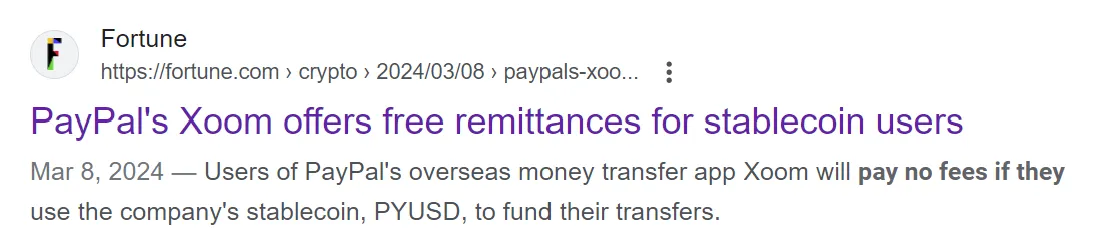
Of course, the service was never truly free. PayPal could remove the visible fee while preserving, or even increasing, the less visible FX spread. PYUSD also gave PayPal a remittance use case for its stablecoin and a reason for customers to hold balances inside PayPal’s ecosystem rather than cashing out immediately. Xoom made twice as much money on the FX markup, and it could simply increase this further while eliminating more visible fees:
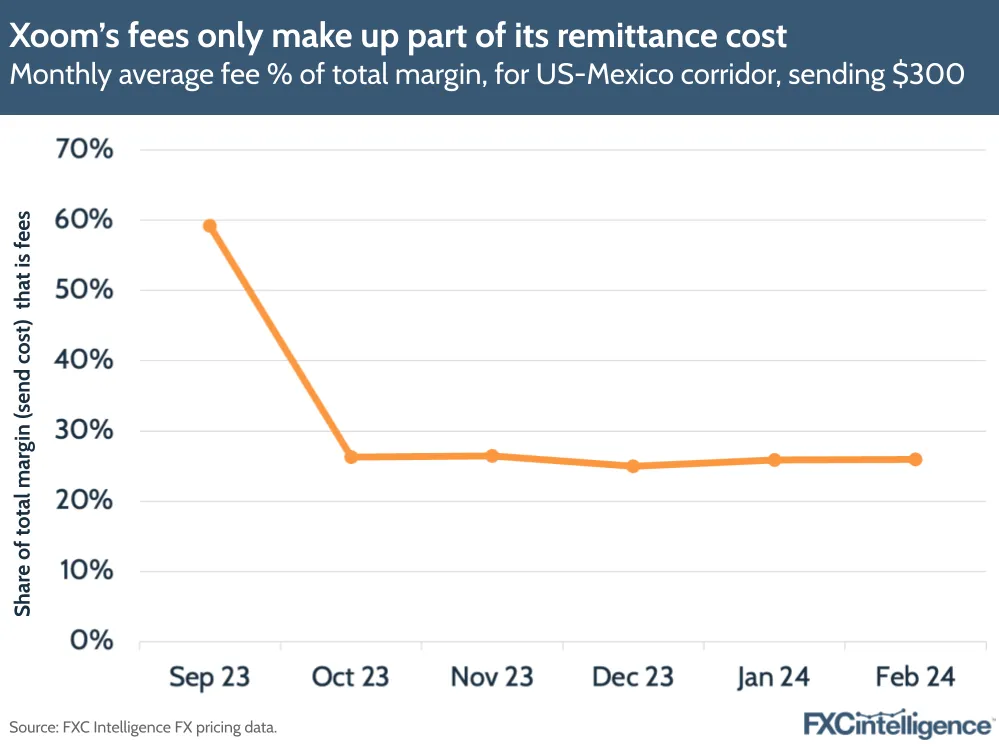
Why, then, did Xoom ask customers to select PYUSD merely as a funding method? If PYUSD genuinely made the underlying remittance infrastructure much faster and cheaper, why wouldn’t PayPal use it invisibly for every transfer instead of selling it back into dollars before completing the ordinary fiat payout? Consumers don’t know or care which back-office protocols a company uses to provide its financial or insurance services.
PayPal’s next PYUSD/Xoom announcement made the same point from the other side. In November 2024, PayPal said it would let disbursement partners use PYUSD to settle Xoom transfers, starting with Cebuana Lhuillier and Yellow Card. For consumers, the endpoint remained the same remittance utility: send through Xoom or PayPal, receive into a local bank or mobile-money account. The stablecoin moved deeper into the back office, but it still did not change what customers actually bought.
By 2026, PayPal was actually willing to subsidize PYUSD relative to conventional funding methods: it kept PYUSD-funded Xoom transfers at $0 while introducing bank-funding fees, and it began paying 4% rewards to eligible PYUSD holders. The apparent objective was to manufacture circulation, keep balances inside PayPal’s ecosystem, and potentially capture reserve-income economics through its Paxos commercial partnership.
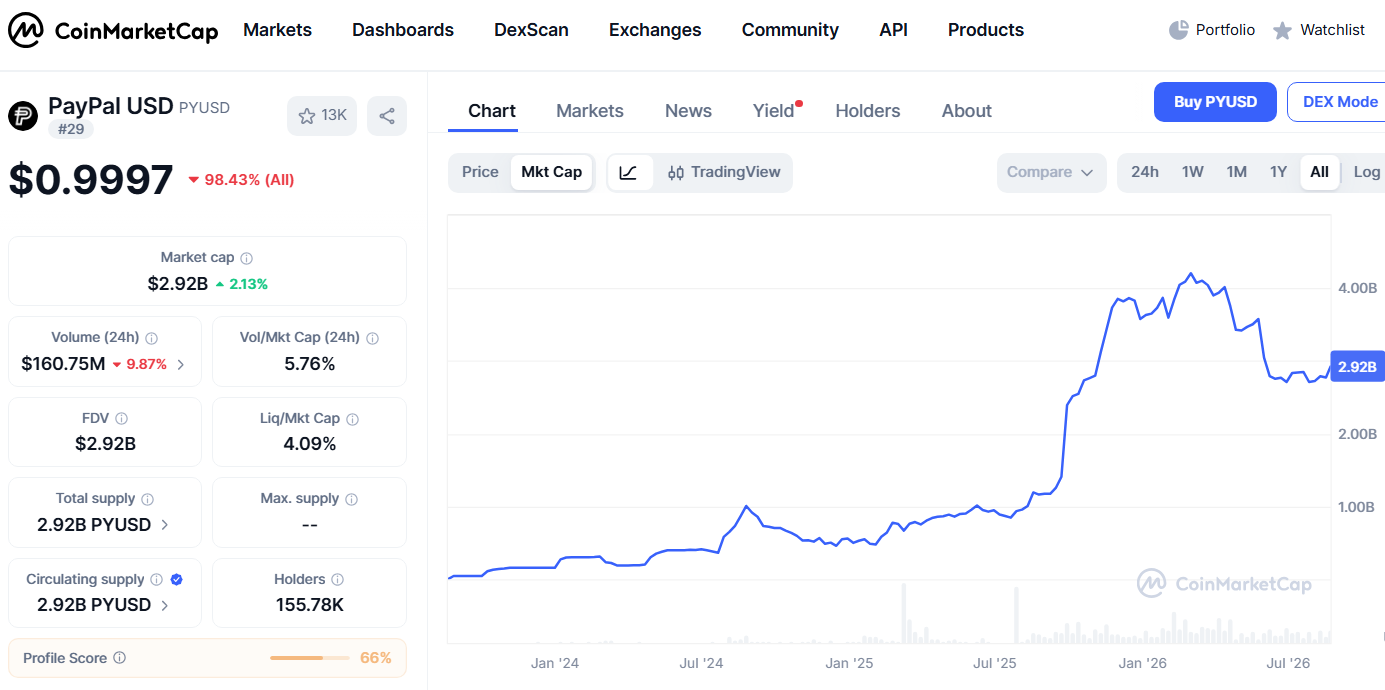
PYUSD’s supply history makes the distinction even clearer. It rose from roughly $200 million to above $1 billion in 2024 as Kamino and Drift offered 15–18% subsidized yields, then collapsed toward $600 million as those incentives faded. A much larger 2025 liquidity push through Kamino, Aave, Spark and especially Ethena helped drive circulation above $4 billion by early 2026; Ethena alone held about $1.1 billion.
Then PayPal expanded PYUSD availability to 70 markets in March 2026 and pitched faster, lower-cost global transfers. Yet circulation fell roughly $1.3 billion over the following months as Aave PYUSD dropped from $445 million on March 1 to about $10 million by August and large Ethena positions unwound. By 2026, PYUSD looked much more like subsidy-sensitive crypto liquidity moving in and out than Xoom customers discovering a new payment rail.
In Conclusion
Xoom’s story demonstrates that being early is not enough. Xoom had almost every advantage a fintech founder could ask for: elite investors, PayPal Mafia credibility, a strong early digital product, an IPO, and then PayPal’s distribution. It also had the right target. Western Union and MoneyGram were expensive, offline-heavy, and vulnerable to digital disruption.
But Xoom never became the Western Union killer. It protected FX margins instead of using price to widen the gap with incumbents. It focused too narrowly on U.S.-outbound corridors while newer competitors built broader sending footprints. After the PayPal acquisition, it remained too separate, too slowly integrated, and too small to matter inside PayPal’s much larger payments machine.
That is why Wise and Remitly passed Xoom from different directions. Wise attacked cross-border transfers with transparent pricing and global scale. Remitly built the mobile-native migrant-remittance business Xoom should have owned. Xoom, meanwhile, became a PayPal side product.
The PYUSD push mostly showed the same pattern in a newer language. PayPal can remove visible fees, change the funding wrapper, subsidize stablecoin balances, and announce partner settlement experiments. But unless Xoom becomes cheaper, broader, better integrated, and more important to customers, a stablecoin rail will not turn it into the disruptor it was once supposed to become.
If you think we got anything wrong, or if you know why PayPal acquired Xoom in such an unusual way, please share your thoughts in the comments section below.